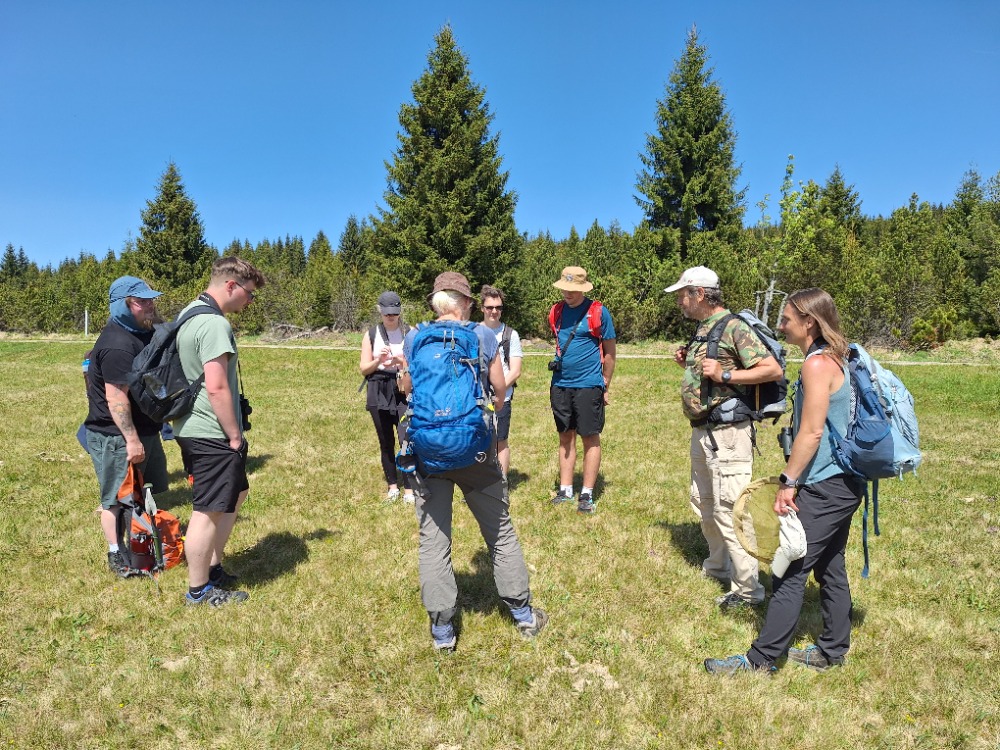
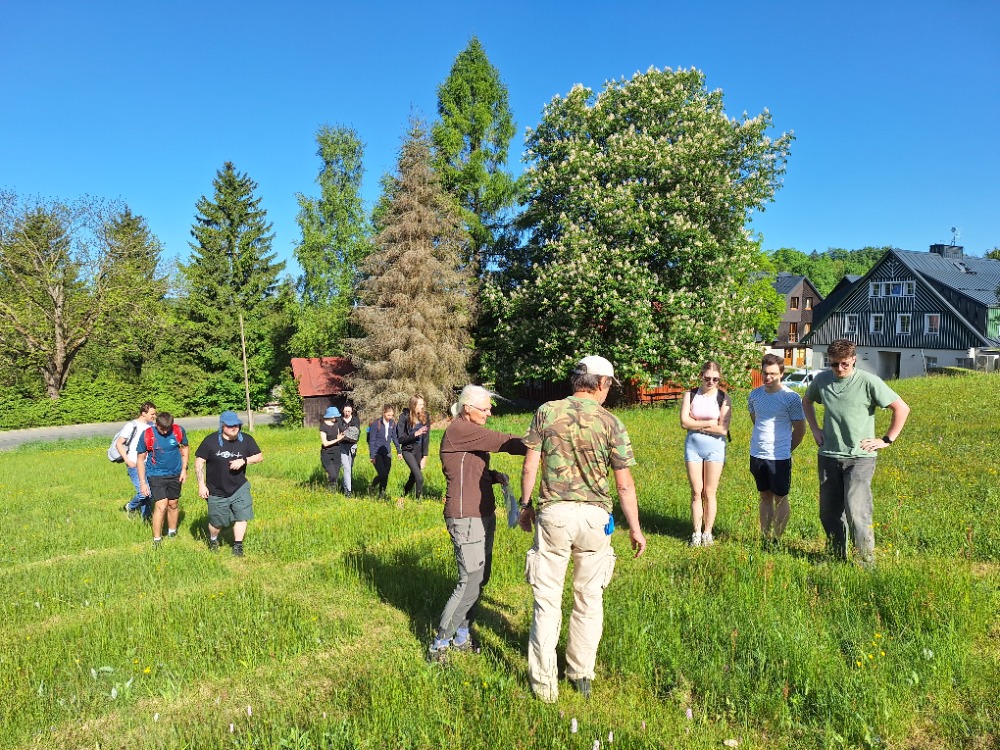
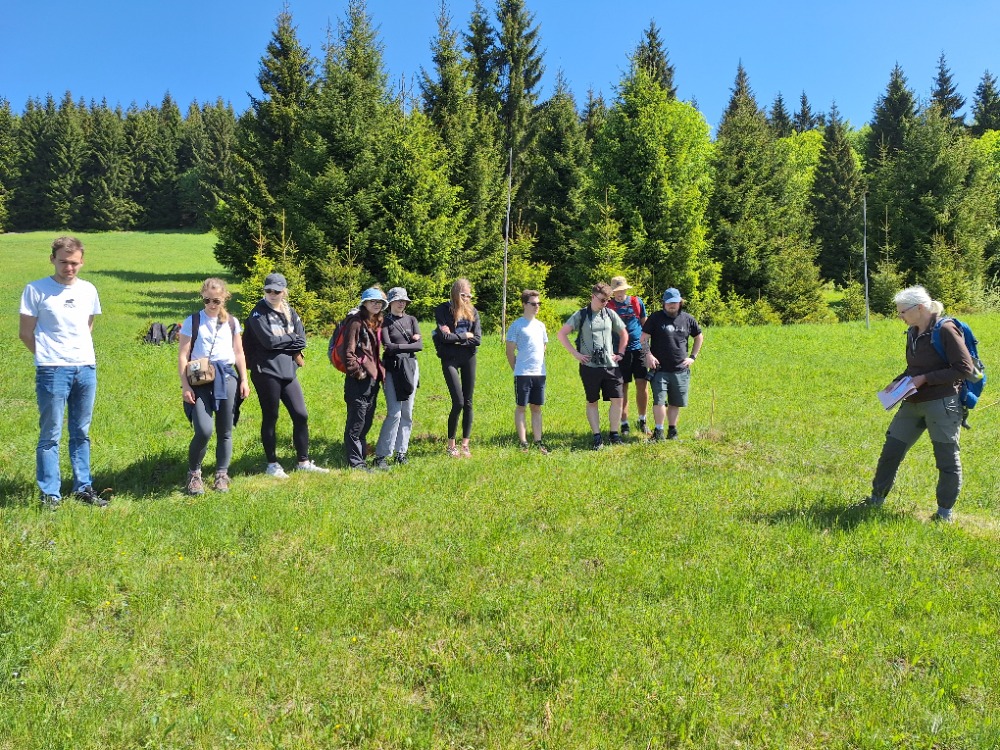
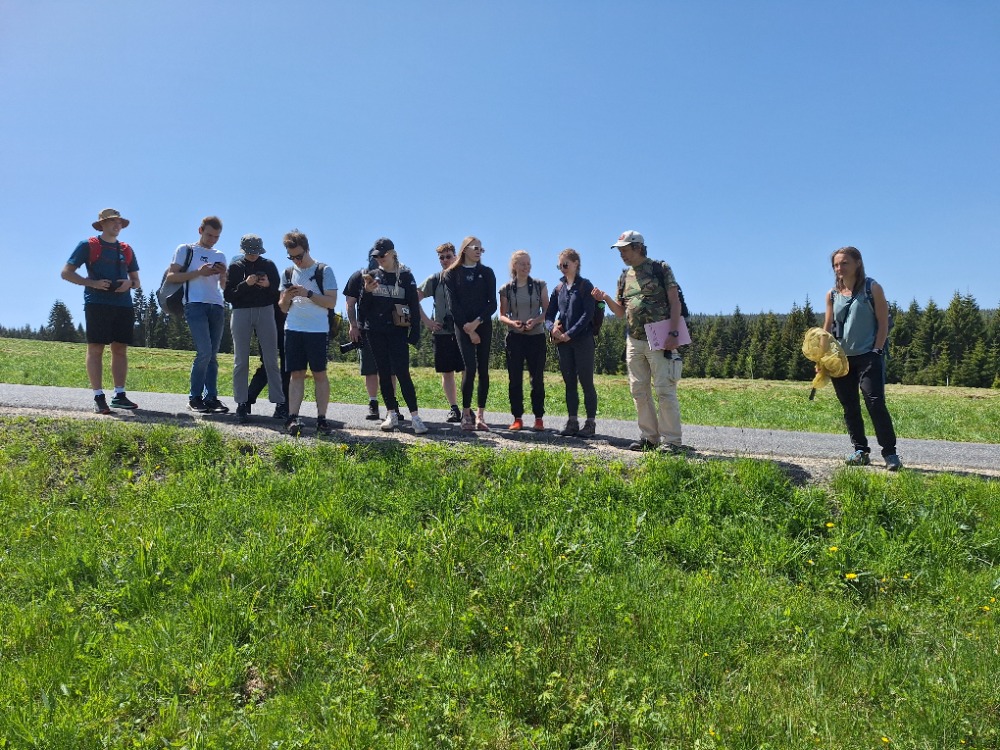
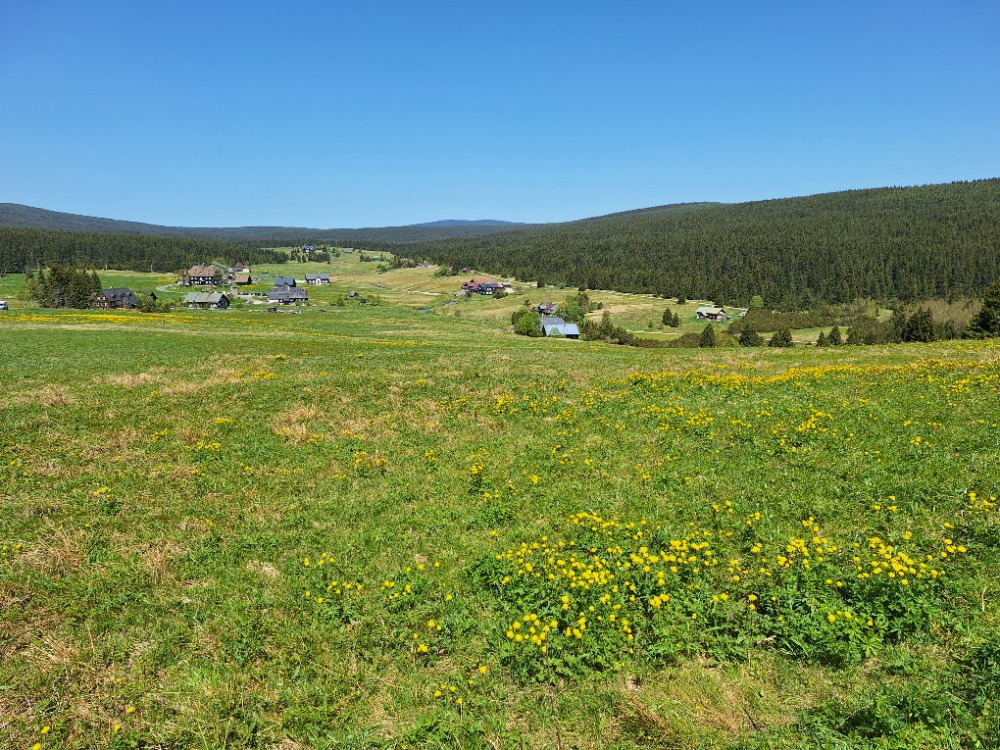
Dne 26. 5. 2026 proběhla odborná exkurze na Hraběticích a na Jizerce organizovaná Katedrou biologie a ekologie Technické univerzity v Liberci v rámci projektu DiGraSo. Cílem exkurze bylo seznámit účastníky s různými typy lučních biotopů Jizerských hor a ukázat jim význam různých typů dlouhodobých managementů pro zachování jejich biologické rozmanitosti.
Na začátku exkurze se účastníci seznámili s dlouhodobým experimentem na Hraběticích, kde byly představeny různé způsoby obhospodařování travních porostů, konkrétně sečení, popelení, aplikace vápna a hnoje. Účastníci zde získali přehled o vlivu jednotlivých typů obhospodařování na vegetaci a druhovou diverzitu luk.
Následně účastníci navštívili dlouhodobý experiment na Jizerce na Pralouce. Účastníci zde mohli vidět rozdíly mezi plochami neobhospodařovanými, sečenými jednou ročně, jednou za dva roky a jednou za čtyři roky. Účastníci pozorovali rozdíly ve vegetaci a diskutovali význam pravidelného managementu pro zachování cenných společenstev horských trojštětových luk.
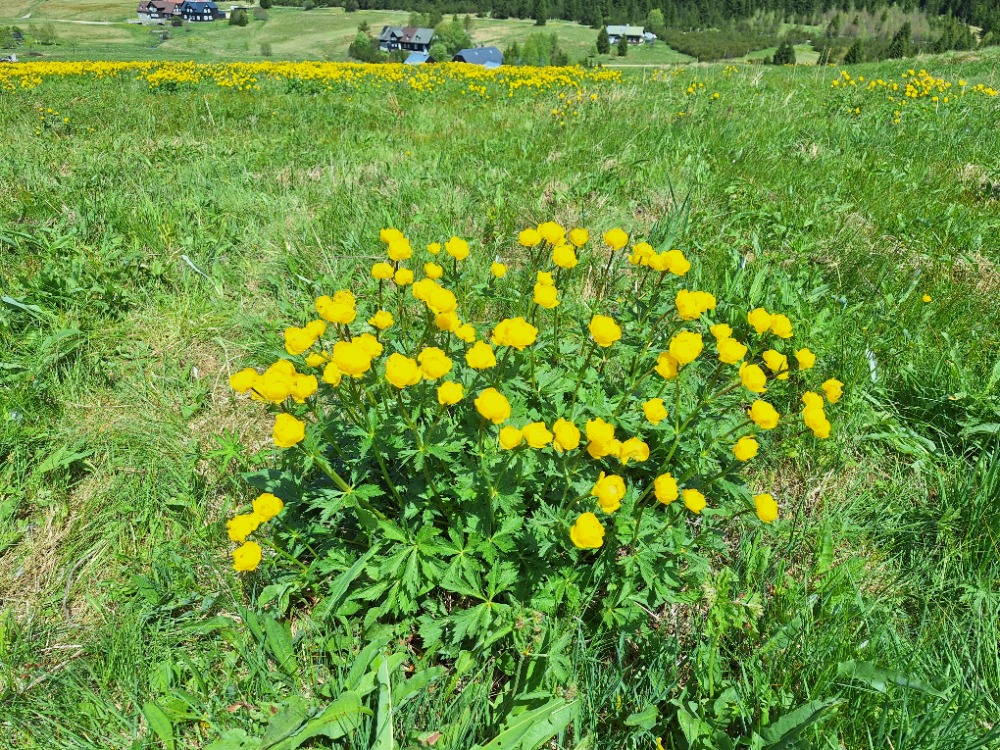
Další zastávkou na exkurzi byla Úpolínová louka na Jizerce, významná botanická lokalita s hojným výskytem úpolínu nejvyššího (Trollius altissimus), který je také ve znaku Jizerských hor.
Součástí exkurze byla také ukázka smilkových trávníků na Jizerce, které představují cenný typ horských travních porostů vázaných na živinami chudá stanoviště. Účastníci se zde seznámili s charakteristickými druhy rostlin a významem vhodného managementu pro jejich dlouhodobé zachování.
V závěru exkurze účastníci navštívili rašeliniště Jizerky, kde se seznámili s charakteristikou tohoto biotopu, jeho specifickými podmínkami prostředí a ekologickými procesy, které zde probíhají. Součástí exkurze byla také ukázka vzácných druhů rostlin vázaných na vrchoviště.
Exkurze přispěla k prohloubení znalostí účastníků o ekologii horských ekosystémů a o významu vhodných typů managementů pro ochranu a zachování cenných přírodních stanovišť v Jizerských horách.
/
Exkursion ins Isergebirge im Rahmen des Projekts DiGraSo (26.5.2026)
Am 26. Mai 2026 fand eine Fachexkursion nach Hrabětice und Jizerka statt, die vom Institut für Biologie und Ökologie der Technischen Universität Liberec im Rahmen des Projekts DiGraSo organisiert wurde. Ziel der Exkursion war es, die Teilnehmenden mit verschiedenen Wiesentypen des Isergebirges vertraut zu machen und die Bedeutung unterschiedlicher langfristiger Bewirtschaftungsformen für den Erhalt ihrer biologischen Vielfalt aufzuzeigen.
Zu Beginn der Exkursion lernten die Teilnehmenden ein Langzeitexperiment in Hrabětice kennen, bei dem verschiedene Bewirtschaftungsformen von Grünlandflächen vorgestellt wurden, insbesondere Mahd, Ascheausbringung sowie die Anwendung von Kalk und Stallmist. Die Teilnehmenden erhielten dabei einen Überblick über die Auswirkungen der einzelnen Bewirtschaftungsformen auf die Vegetation und die Artenvielfalt der Wiesen.
Anschließend besuchten die Teilnehmenden ein weiteres Langzeitexperiment in Jizerka auf der Pralouka. Dort konnten sie die Unterschiede zwischen unbewirtschafteten Flächen sowie Flächen mit jährlicher Mahd, Mahd im Zweijahresrhythmus und Mahd im Vierjahresrhythmus beobachten. Dabei wurden Unterschiede in der Vegetation betrachtet und die Bedeutung einer regelmäßigen Bewirtschaftung für den Erhalt wertvoller Pflanzengesellschaften der montanen Goldhaferwiesen diskutiert.
Eine weitere Station der Exkursion war die Trollblumenwiese in Jizerka, ein bedeutender botanischer Standort mit einem reichen Vorkommen der Hohen Trollblume (Trollius altissimus), die zugleich im Wappen des Isergebirges dargestellt ist.
Zum Programm gehörte auch die Besichtigung von Borstgrasrasen in Jizerka, die einen wertvollen Typ montaner Grünlandgesellschaften auf nährstoffarmen Standorten darstellen. Die Teilnehmenden lernten hier charakteristische Pflanzenarten sowie die Bedeutung eines geeigneten Managements für deren langfristigen Erhalt kennen.
Zum Abschluss der Exkursion besuchten die Teilnehmenden das Hochmoor von Jizerka. Dort wurden die charakteristischen Merkmale dieses Biotops, seine spezifischen Umweltbedingungen sowie die dort ablaufenden ökologischen Prozesse erläutert. Zudem wurden seltene Pflanzenarten vorgestellt, die an Hochmoorstandorte gebunden sind.
Die Exkursion trug zur Vertiefung der Kenntnisse der Teilnehmenden über die Ökologie montaner Ökosysteme sowie über die Bedeutung geeigneter Managementformen für den Schutz und die Erhaltung wertvoller Naturlebensräume im Isergebirge bei.
/
Excursion in the Jizerské Mountains as part of the DiGraSo project (26.5.2026)
On 26.5.2026, a professional excursion to Hrabětice and the Jizerka River was organized by the Department of Biology and Ecology of the Technical University of Liberec as part of the DiGraSo project. The aim of the excursion was to introduce the participants to various types of meadow biotopes of the Jizerské Mountains and to show them the importance of various types of long-term management for preserving their biodiversity.
At the beginning of the excursion, the participants were introduced to the long-term experiment in Hrabětice, where various methods of grassland management were presented, namely mowing, ashing, lime and manure application. The participants gained an overview of the influence of individual types of management on the vegetation and species diversity of meadows.
Subsequently, the participants visited the long-term experiment in the Jizerka River at Pralouka. The participants could see the differences between uncultivated areas, mowed once a year, once every two years and once every four years. The participants observed the differences in vegetation and discussed the importance of regular management for the preservation of valuable mountain three-stemmed meadow communities.
The next stop on the excursion was the Úpolínová louka in the Jizerka River, an important botanical locality with an abundant occurrence of the highest úpolín (Trollius altissimus), which is also in the emblem of the Jizerské Mountains.
The excursion also included a demonstration of the immortelle grasslands in the Jizerka River, which represent a valuable type of mountain grasslands tied to nutrient-poor habitats. The participants were introduced to the characteristic plant species and the importance of appropriate management for their long-term preservation.
At the end of the excursion, the participants visited the Jizerka peat bog, where they became acquainted with the characteristics of this biotope, its specific environmental conditions and the ecological processes that take place there. The excursion also included a demonstration of rare plant species associated with the highlands.
The excursion contributed to deepening the participants' knowledge about the ecology of mountain ecosystems and the importance of appropriate types of management for the protection and preservation of valuable natural habitats in the Jizera Mountains.