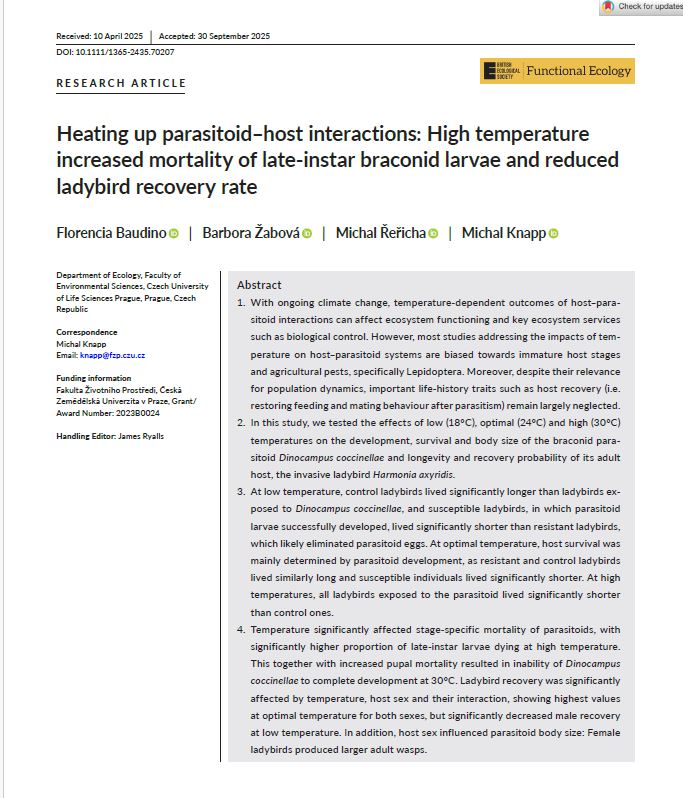
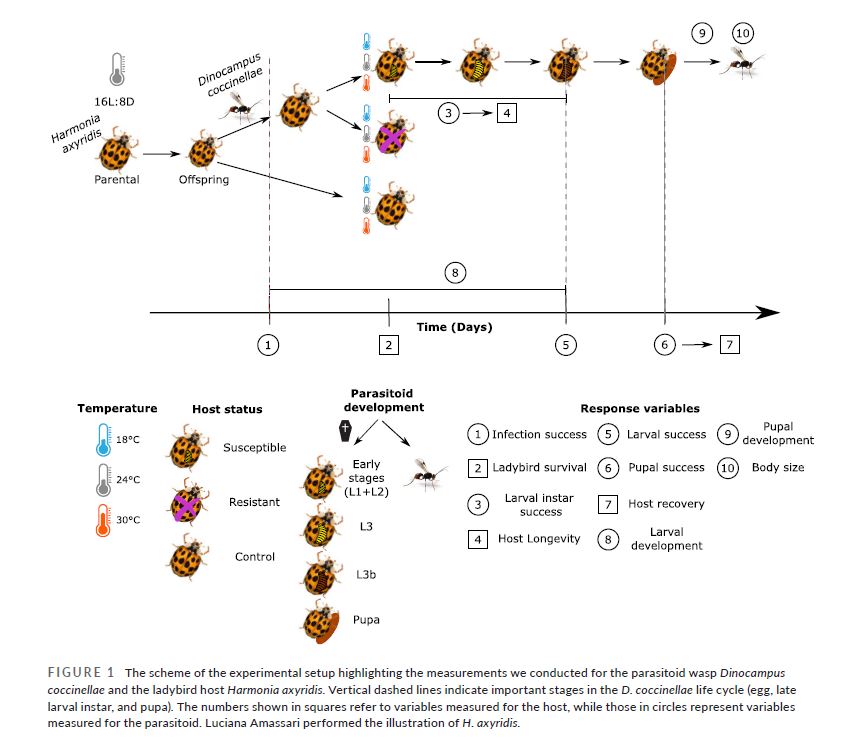
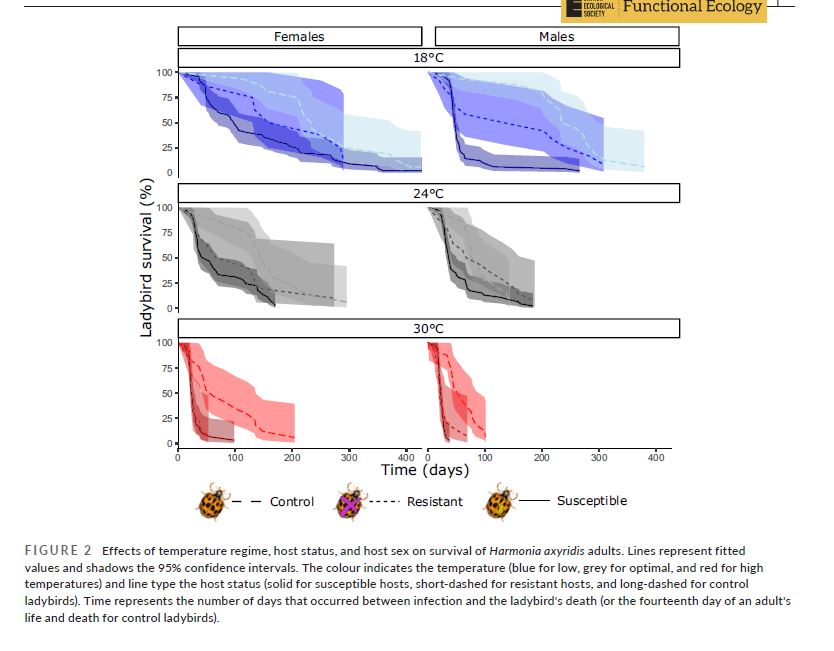
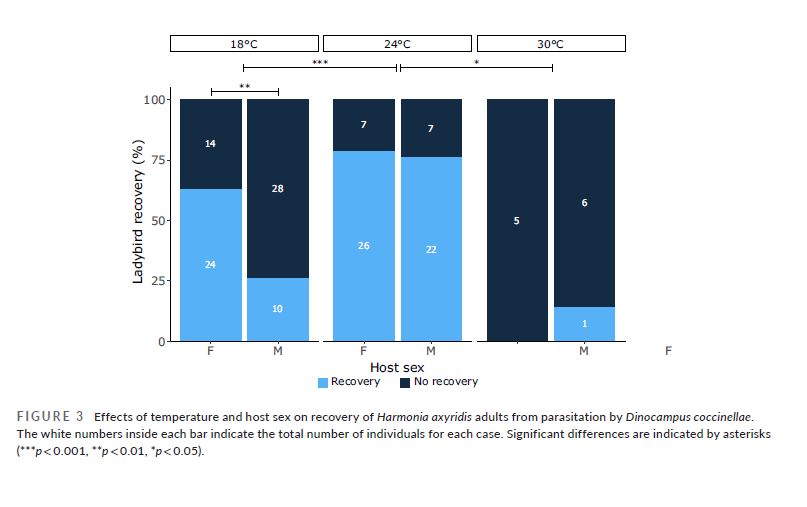
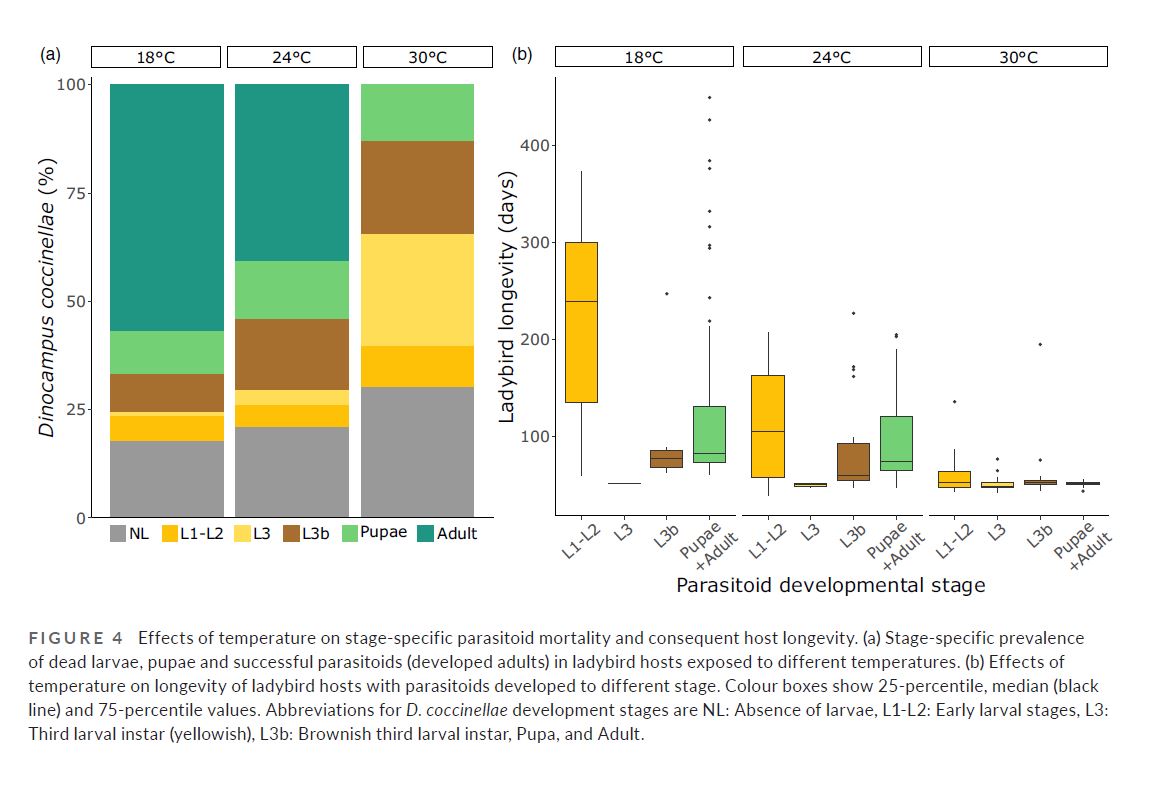
Braconid wasps Dinocampus coccinellae use viruses to manipulate their ladybird hosts in a remarkable way: shortly before pupation, they induce paralysis in the ladybirds, which then act as a living shield protecting the parasitoid pupa against predators. In our study, we investigated the interaction between ladybirds and their parasitoids under different temperature regimes in order to explore potential outcomes under climate change scenarios. The higher temperature of 30 °C was detrimental both to infected ladybirds and to the parasitoids, which already suffered high mortality during their larval development and likely killed their hosts in the process. Elevated temperature also reduced the ability of ladybirds to recover from virus-induced paralysis and to resume movement, feeding and reproduction.
Further details can be found in the article available here.