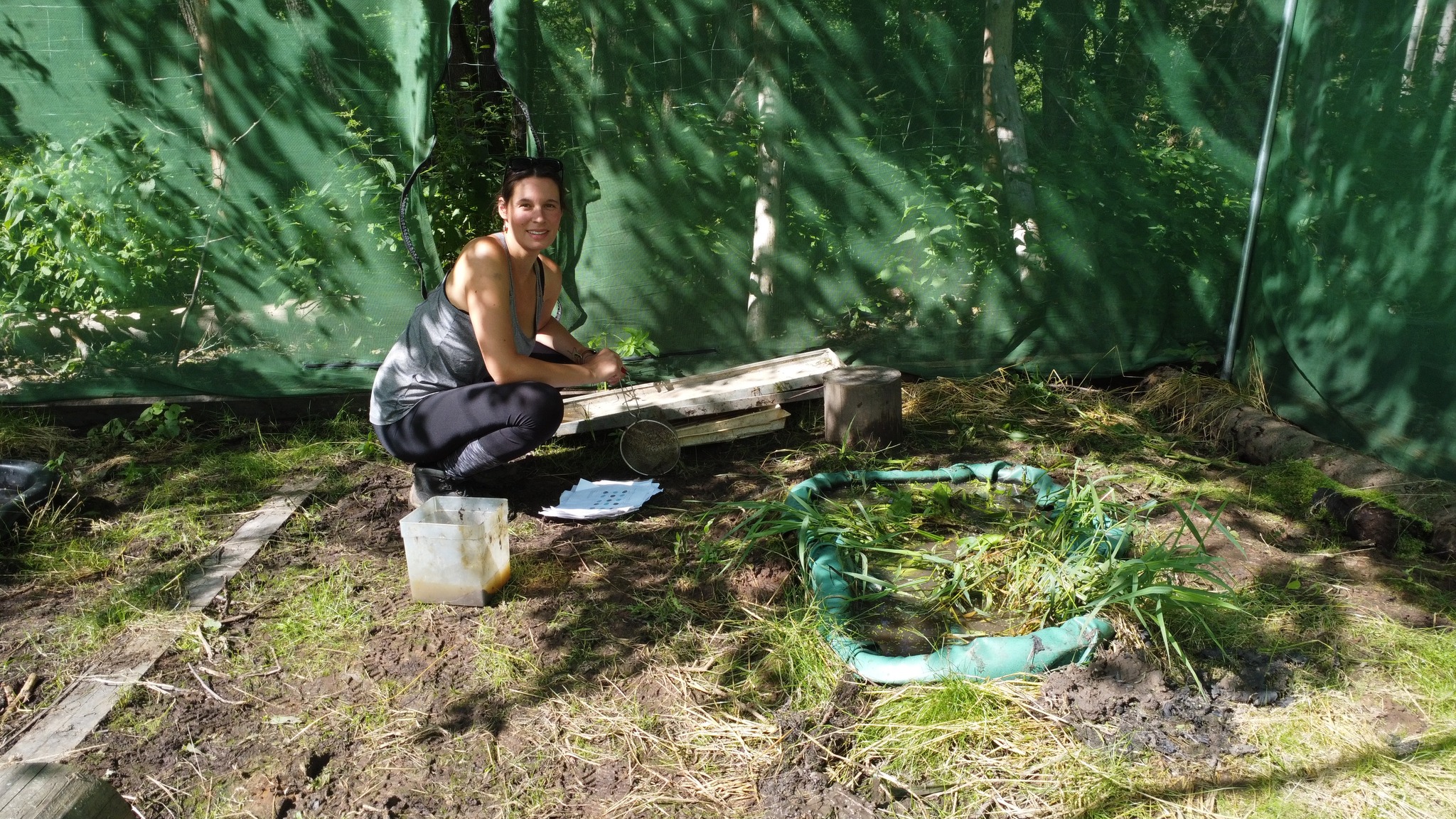
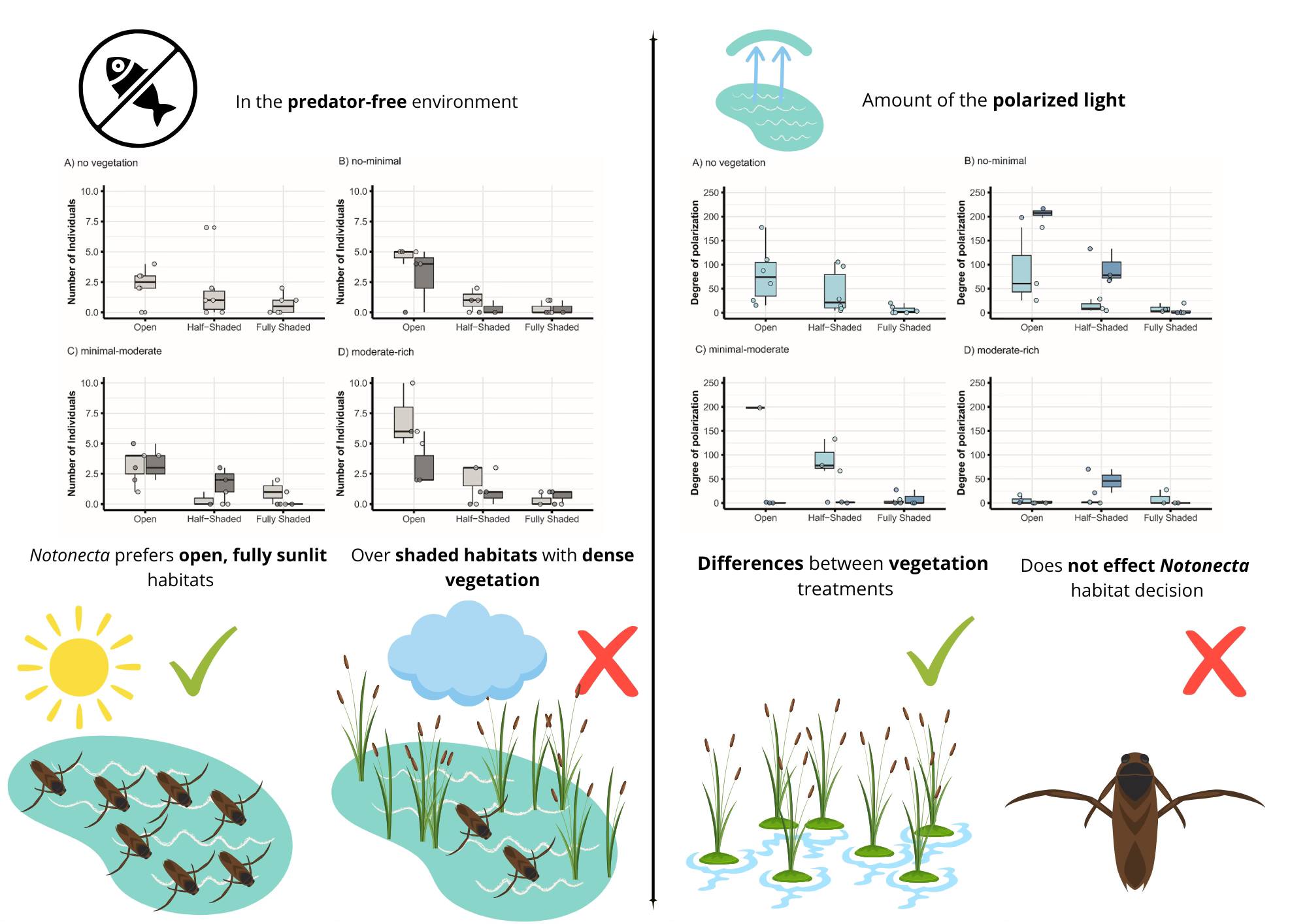
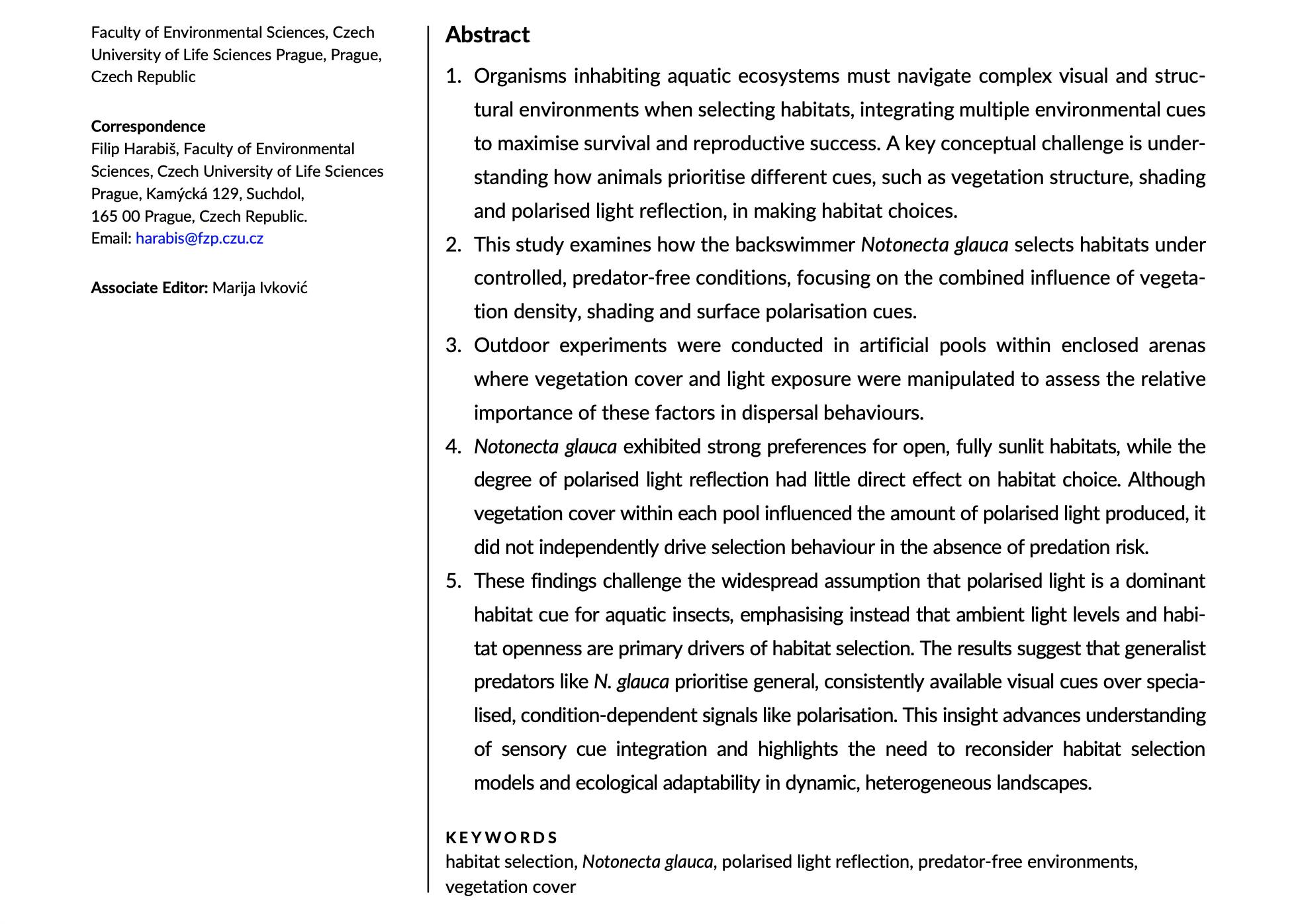
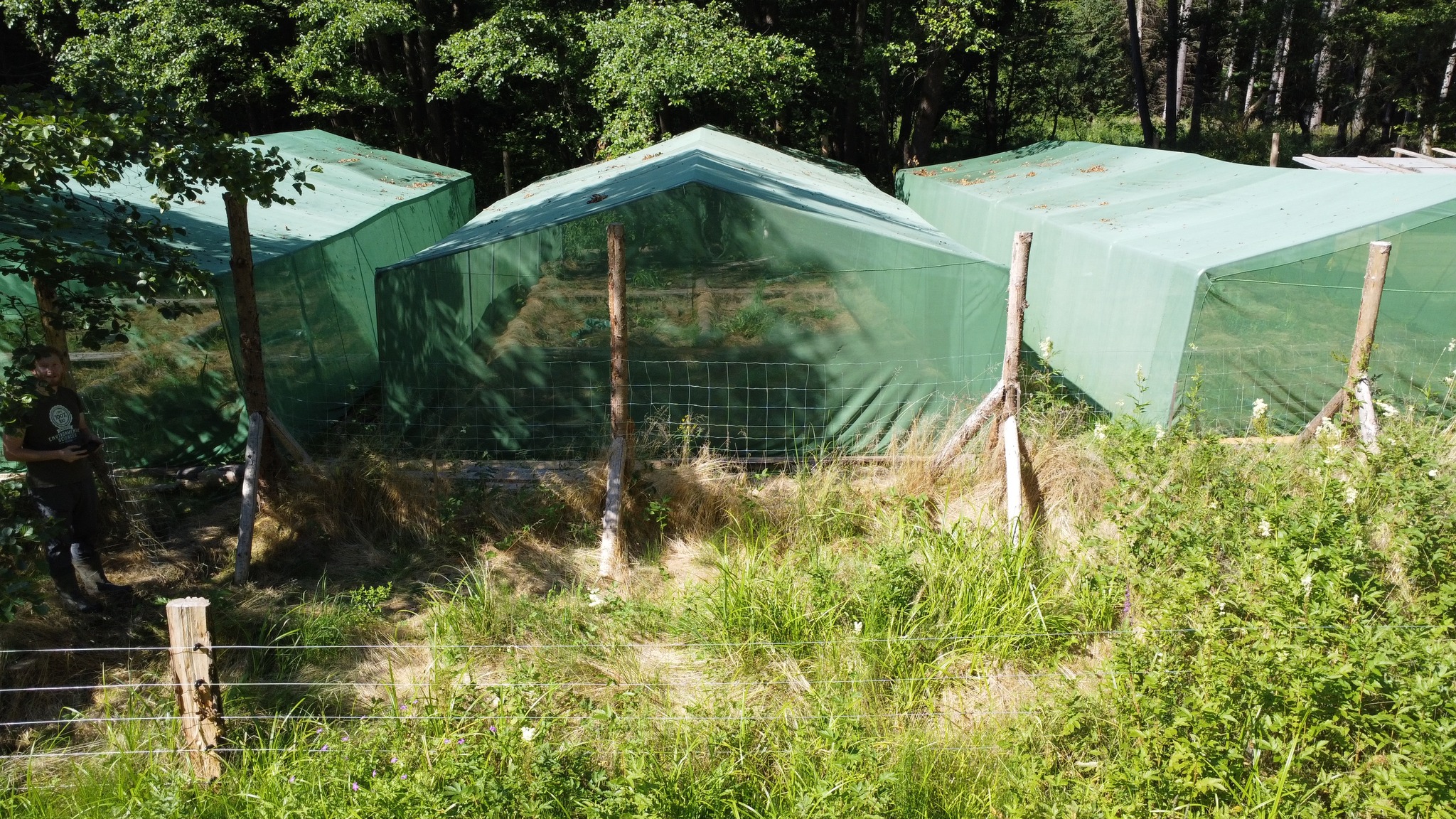
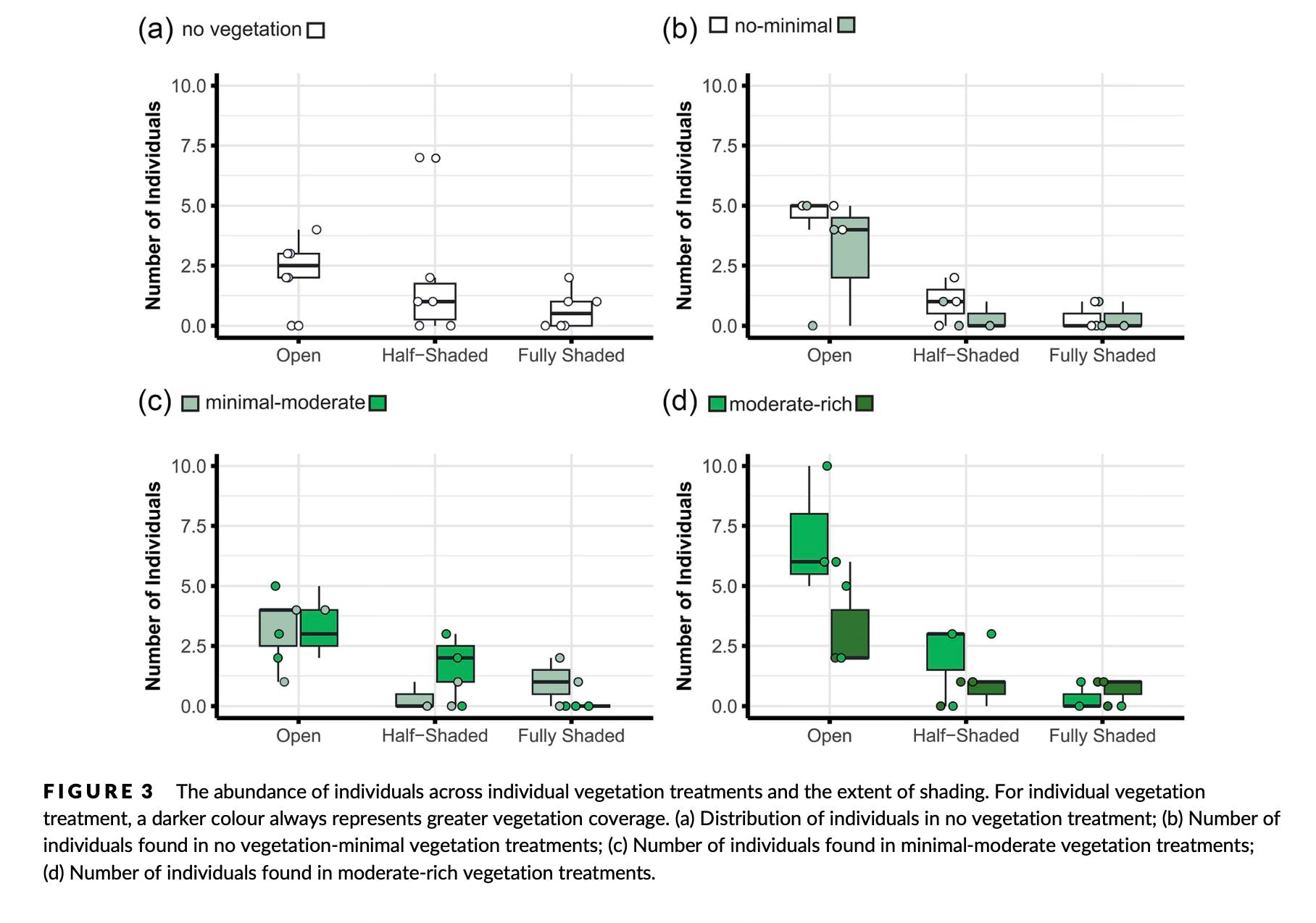
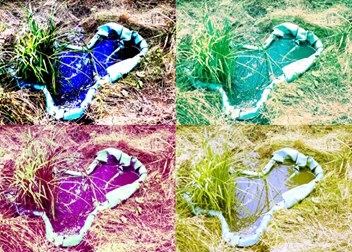
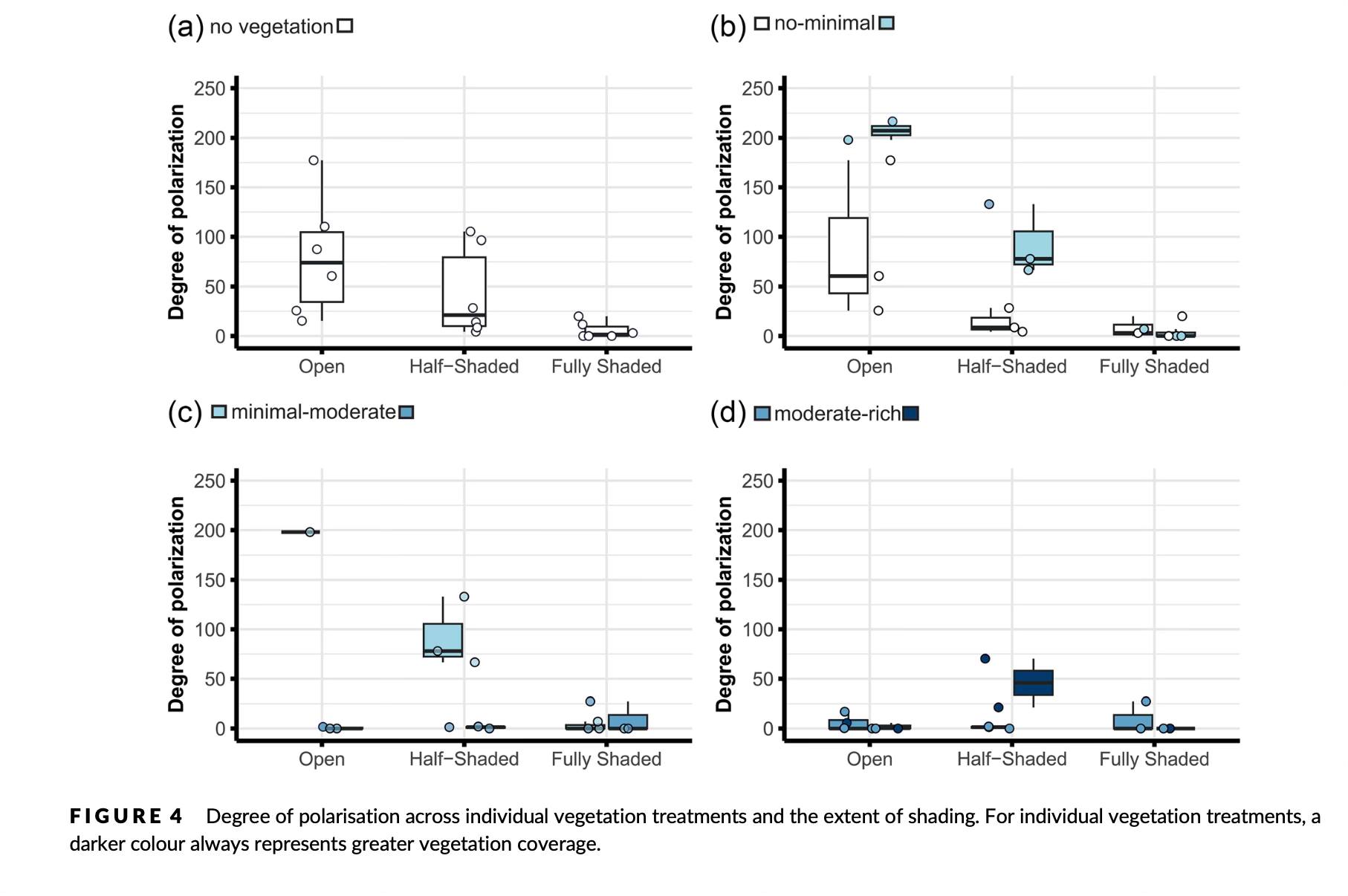
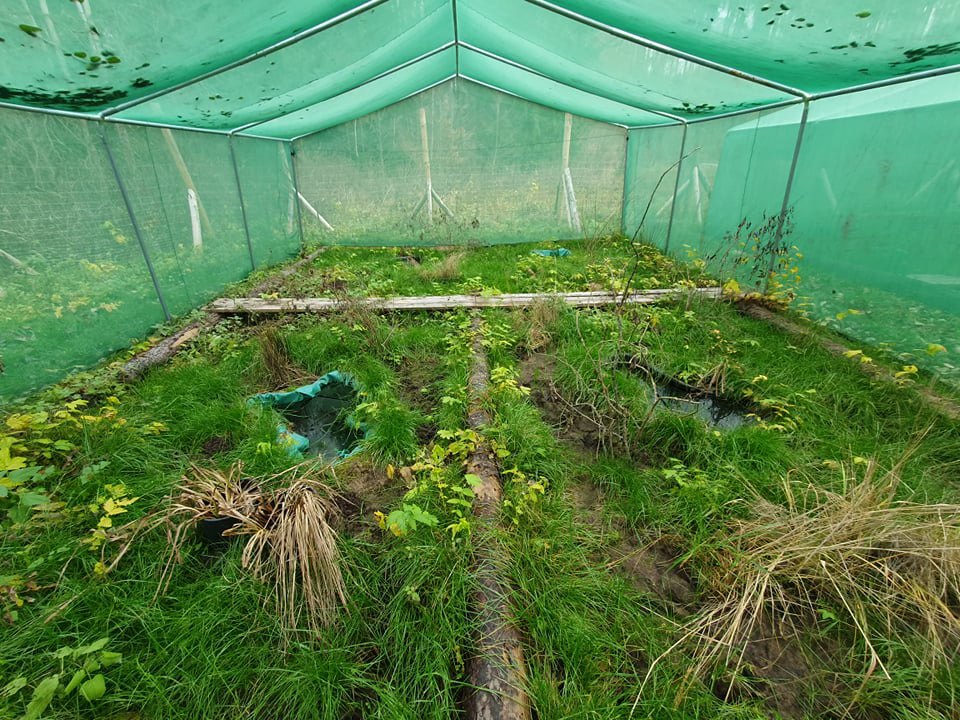
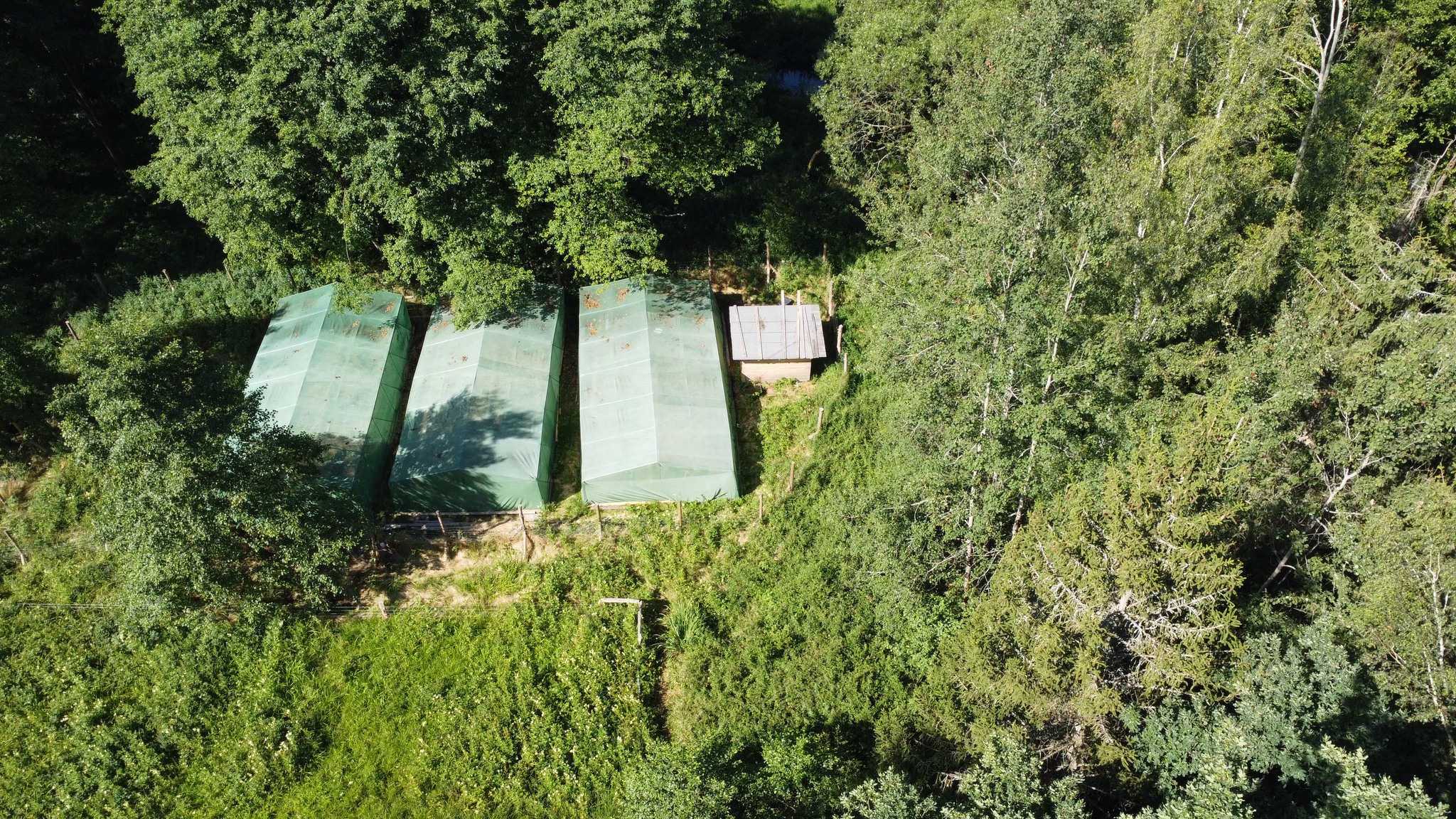
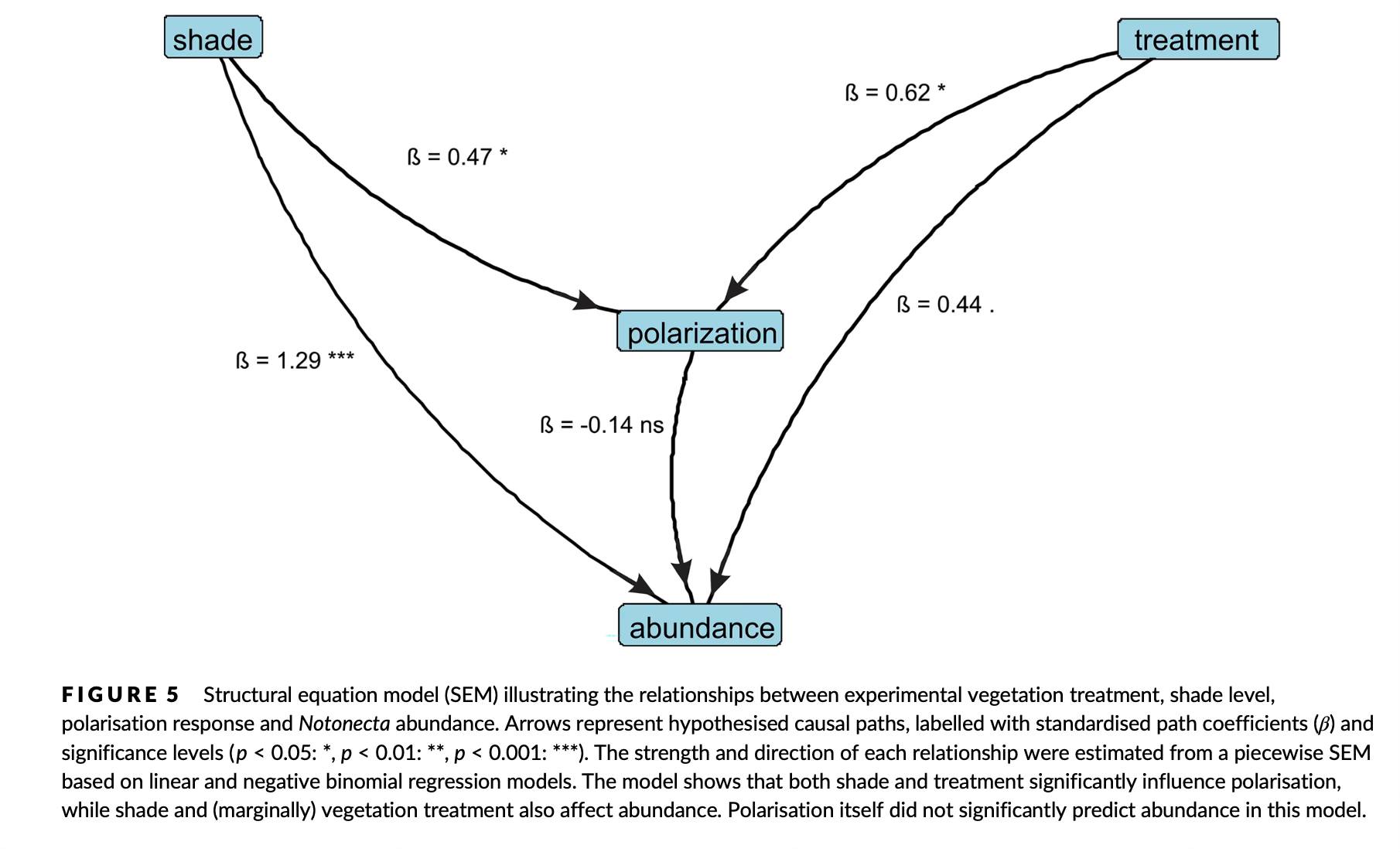
In experimental arenas, we manipulated vegetation density and shading, while simultaneously measuring the amount of polarized light reflected from the water surface. Individual backswimmers were marked and their habitat preferences were recorded. Our results showed that Notonecta glauca strongly prefers open, fully sunlit water bodies. Vegetation density did not play a significant role in habitat choice. The most striking and unexpected result was that the amount of polarized light, which is considered a key cue for habitat selection in many aquatic insect species, had no significant effect on habitat choice in N. glauca. Our findings therefore indicate that, when colonizing new habitats, N. glauca does not rely on complex optical signals such as polarization, but rather on simple and reliable cues. This is important not only for understanding the behaviour of this species, but also for the conservation and restoration of ponds and small water bodies.
The full article is available here.