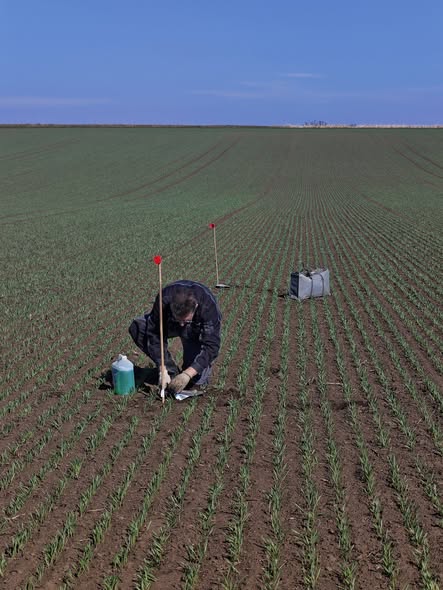
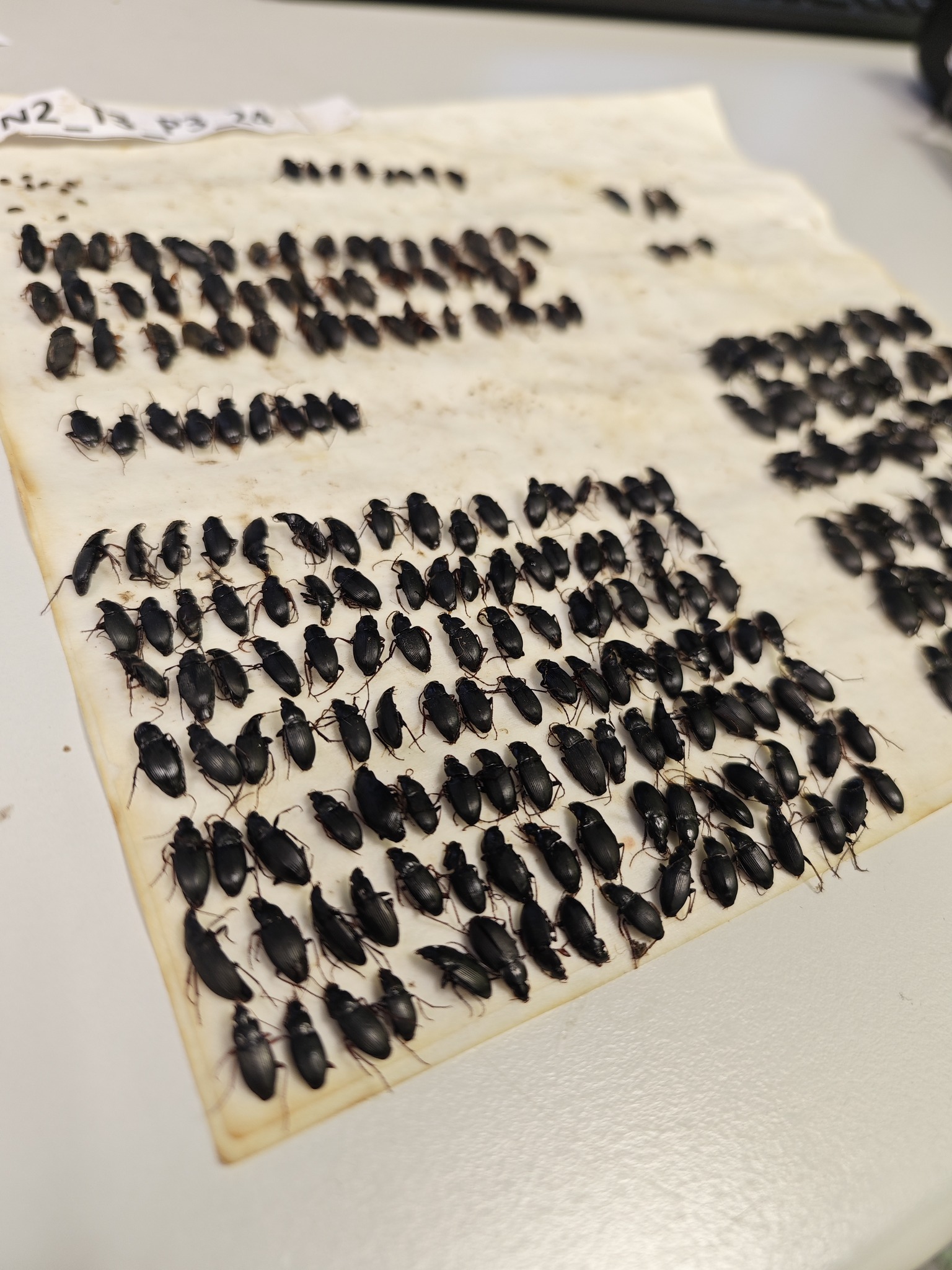
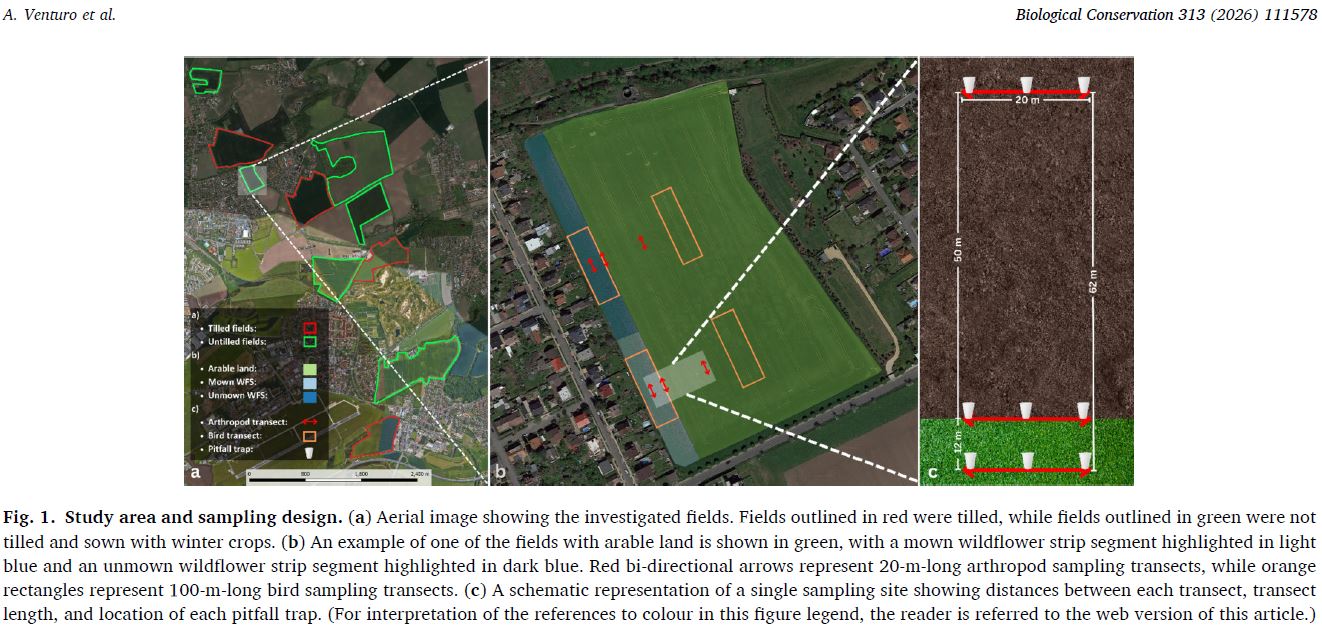
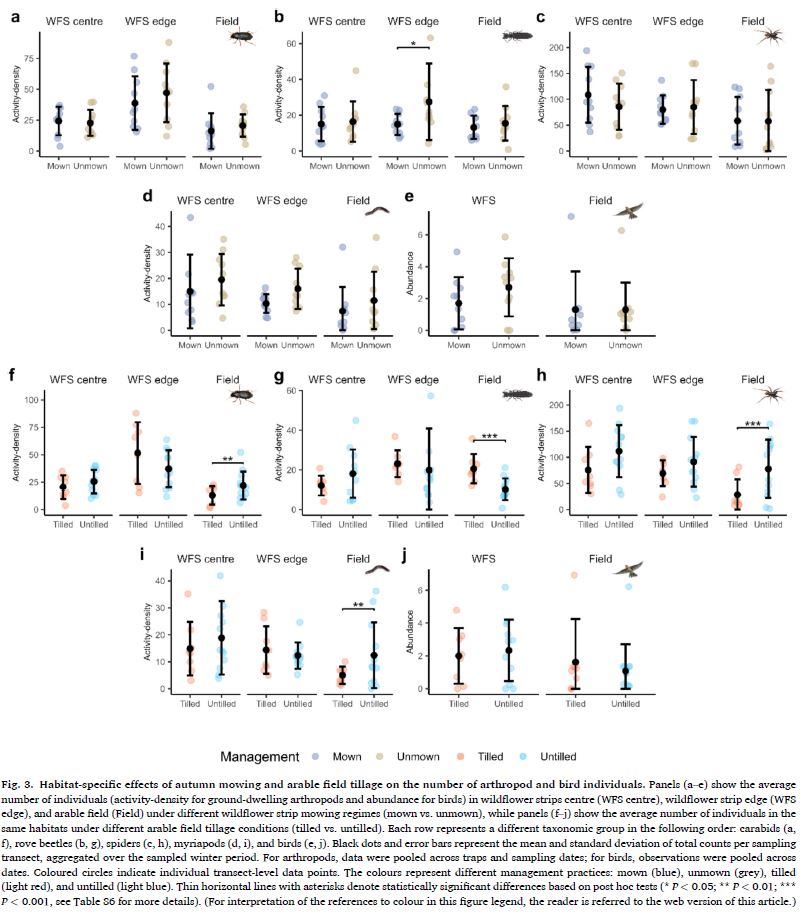
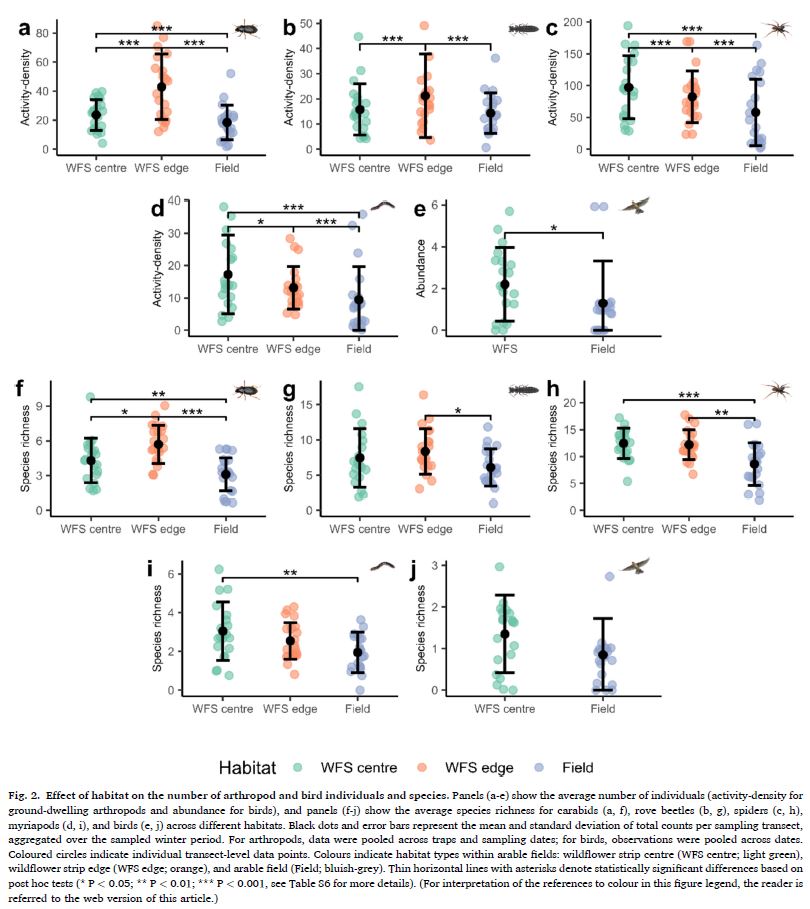
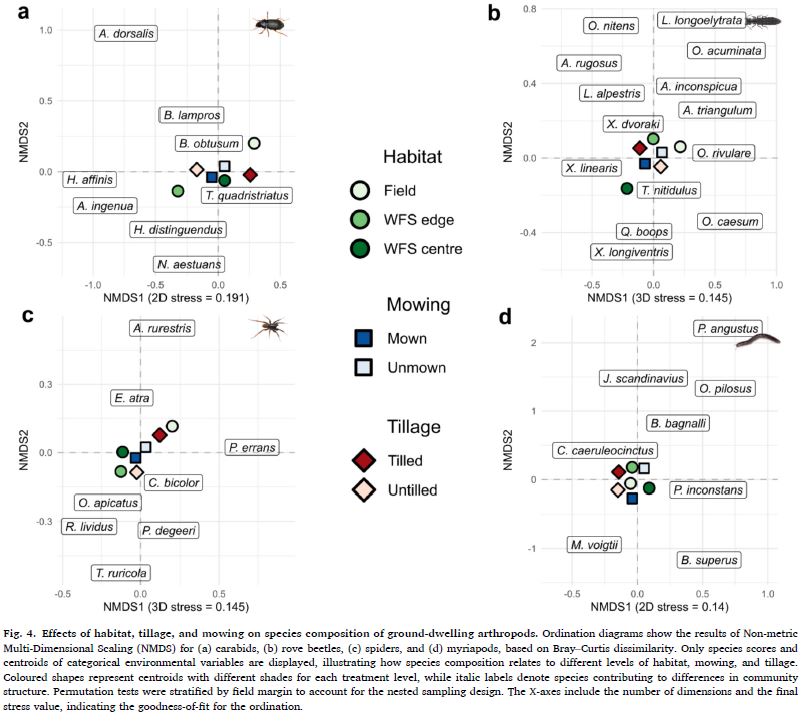
Our latest study demonstrates that wildflower strips represent a key element of agricultural landscapes not only in summer, but also in winter, when they provide suitable habitat for spiders, carabid beetles and rove beetles, while simultaneously increasing bird abundance. In winter, the attractiveness of arable fields decreases markedly for spiders, carabids, centipedes and millipedes if the fields are left without any vegetation after autumn ploughing, whereas the response of rove beetles is the opposite. Whether a wildflower strip was mown before winter or not had surprisingly little effect on assemblages of arthropods active on the soil surface. The full text of the study published in Biological Conservation is available here.
Supported by the projects: Towards the understanding of processes responsible for farmland biodiversity loss: insights from Central European birds (23-07103S) and Efficient support of biodiversity in agricultural landscapes using perennial wildflower strips (SS05010123).