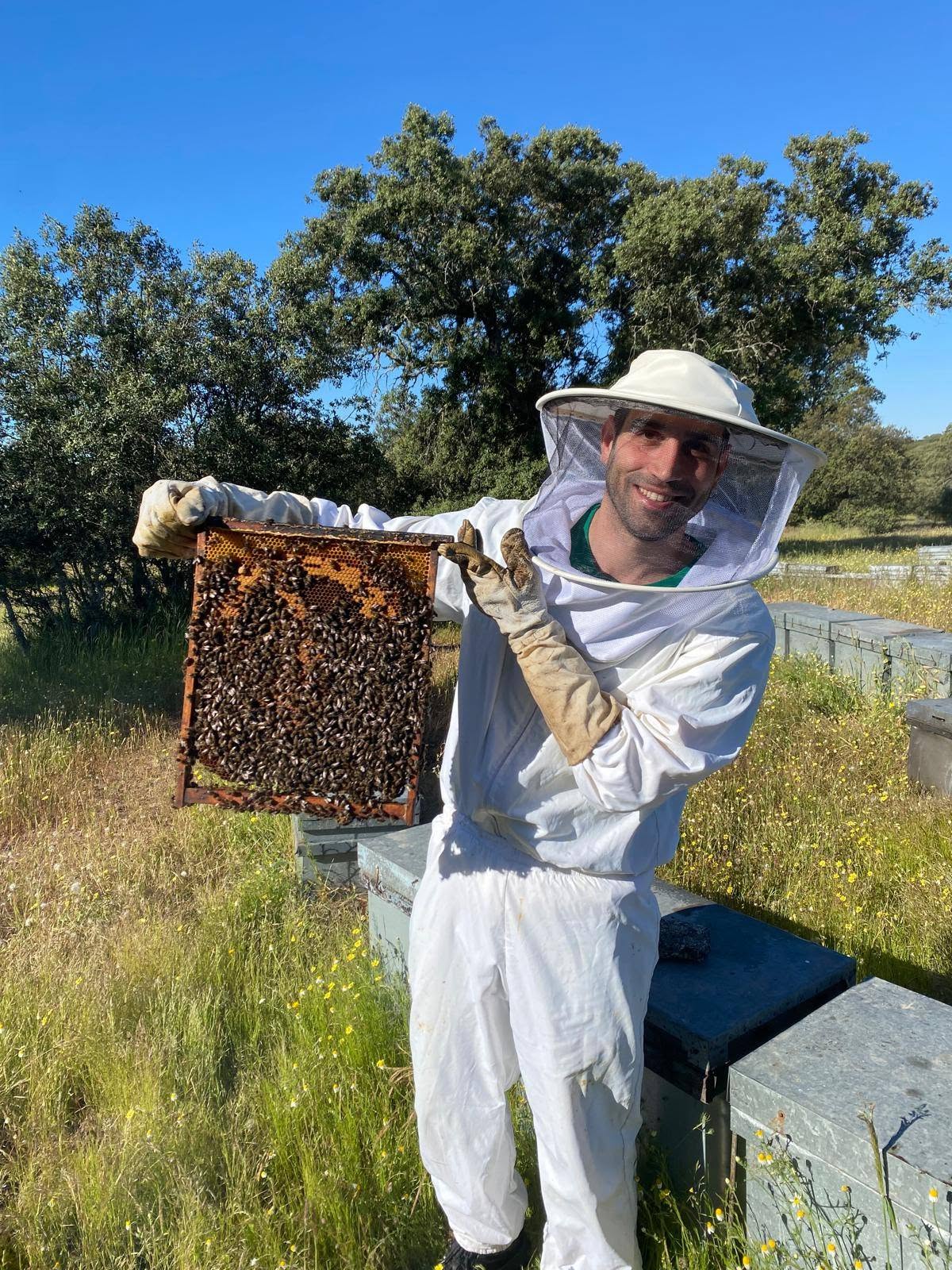
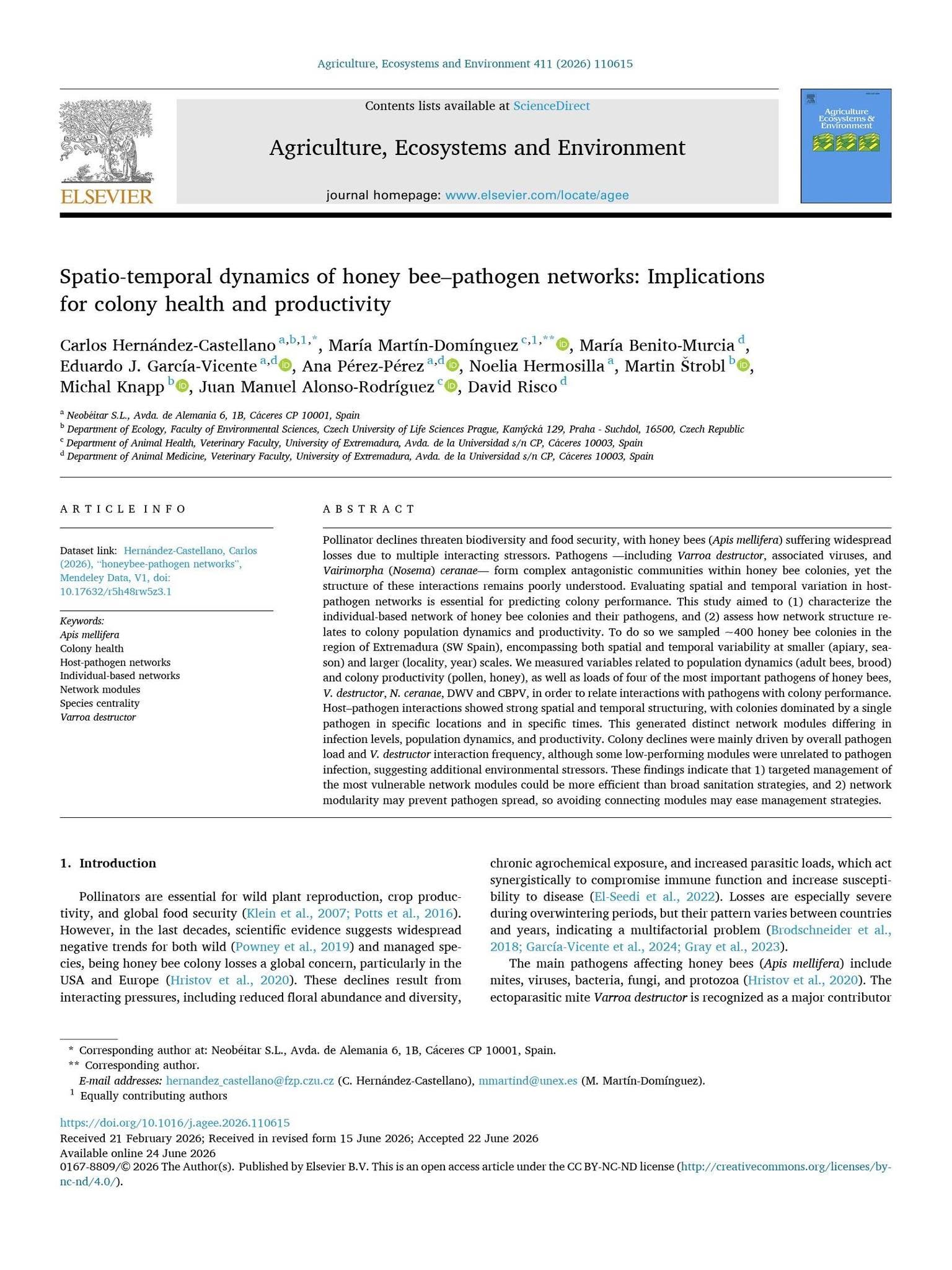
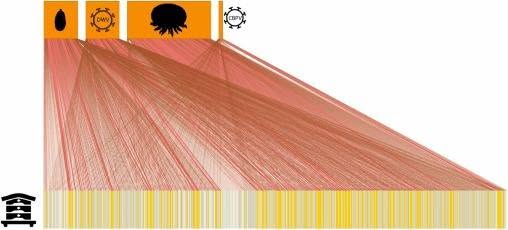
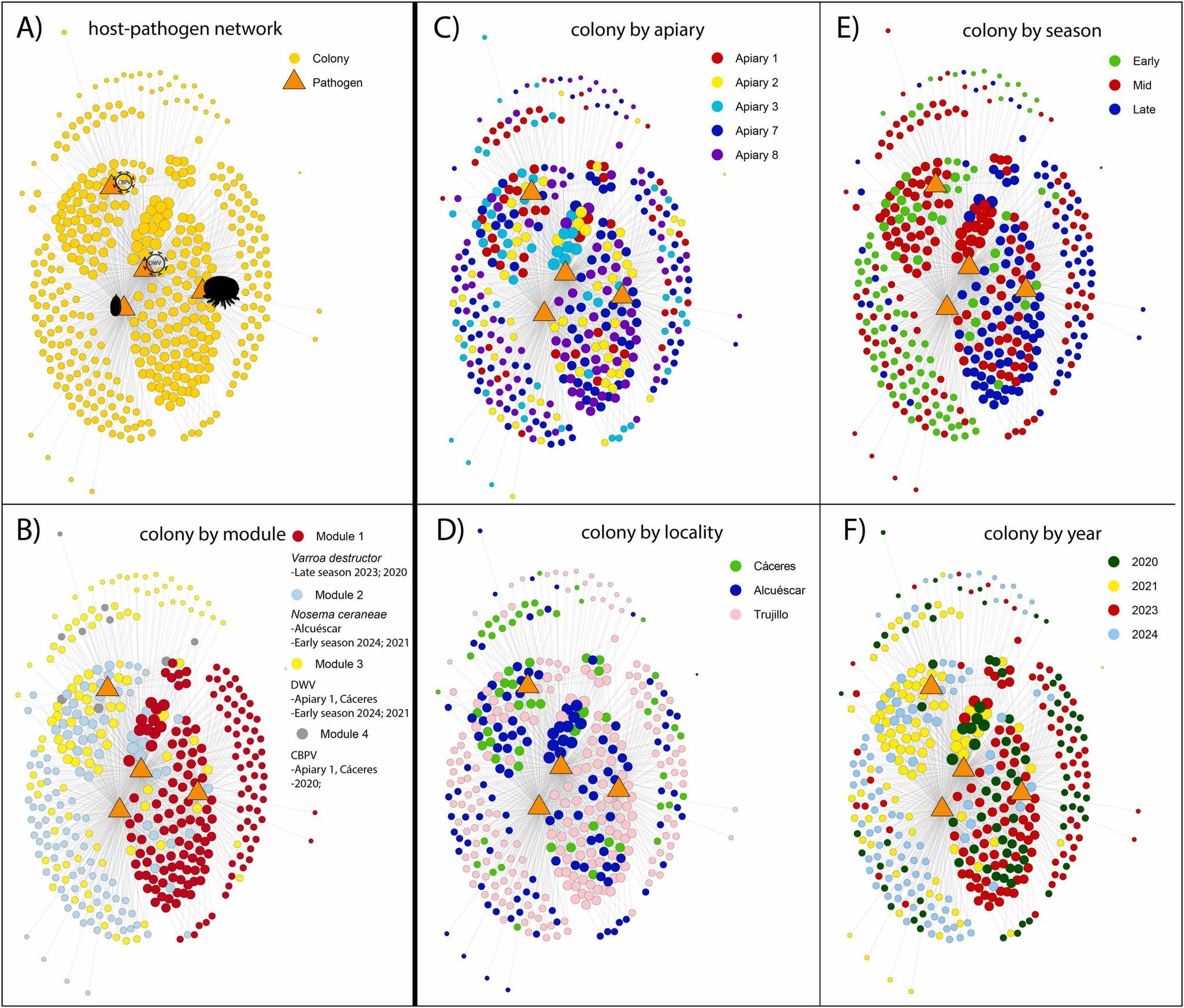
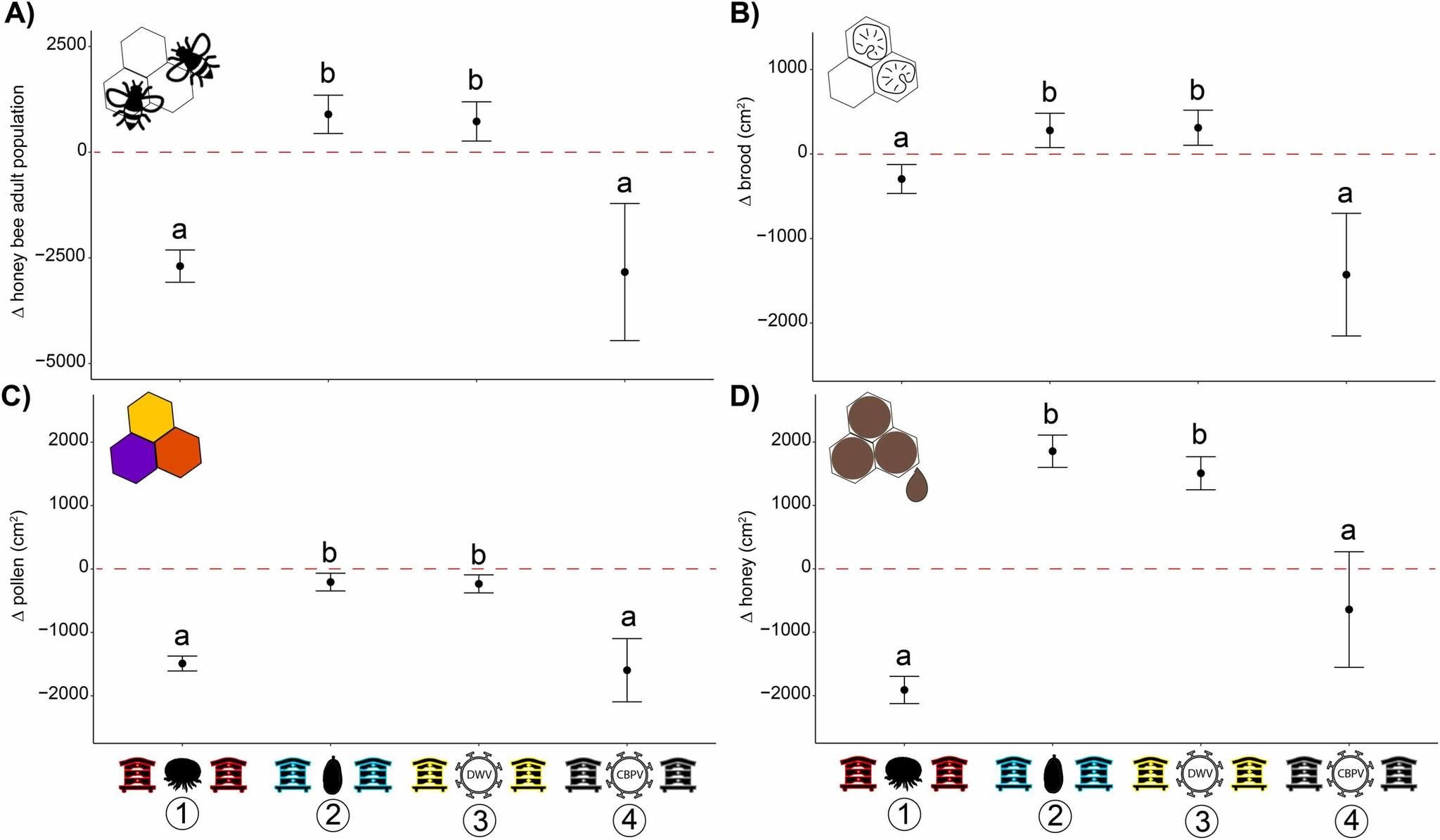
Congratulations to Carlos! His paper exploring the use of ecological networks to study relationships between the honey bee and its pathogens has just been published in Agriculture, Ecosystems & Environment. The study shows that, despite substantial temporal and spatial variability, most honey bee colonies are infected by only a single dominant pathogen, while pronounced co-infections are relatively rare. When the dominant pathogen is Varroa destructor or the Chronic Bee Paralysis Virus, significant negative impacts on colony health are expected. The results suggest that controlling these pathogens can be highly important, although the benefits of intervention depend on local conditions. The study also highlights that high densities of managed honey bee colonies may have negative impacts: not only affecting honey bees themselves but also other pollinator groups.
Link to the full article here.