
Comprehensive research findings elaborated by our PhD student Niluka Wickramasinghe et al., encompassing both laboratory and fieldwork, were published in Chemosphere (IF = 8.1). This study evaluated the extractability, crop uptake, and ecotoxicity of conventional and emerging contaminants from pre-treated (composted and pyrolysed) sewage sludges in two agricultural soils. Composted and pyrolysed sludges reduced As, Cu, and Ni levels, and winter wheat grain metal(loid) concentrations remained below statutory limits. Organic pollutants, including carbamazepine and bisphenol A, were detected mainly in roots but were significantly reduced by pyrolysis (below detection limits) and composting (up to 71%). No organic contaminants were found in soils 12 months post-application. Pre-treatment of sewage sludge generally minimises contaminant mobility, though further research is needed across varied soils and crops.
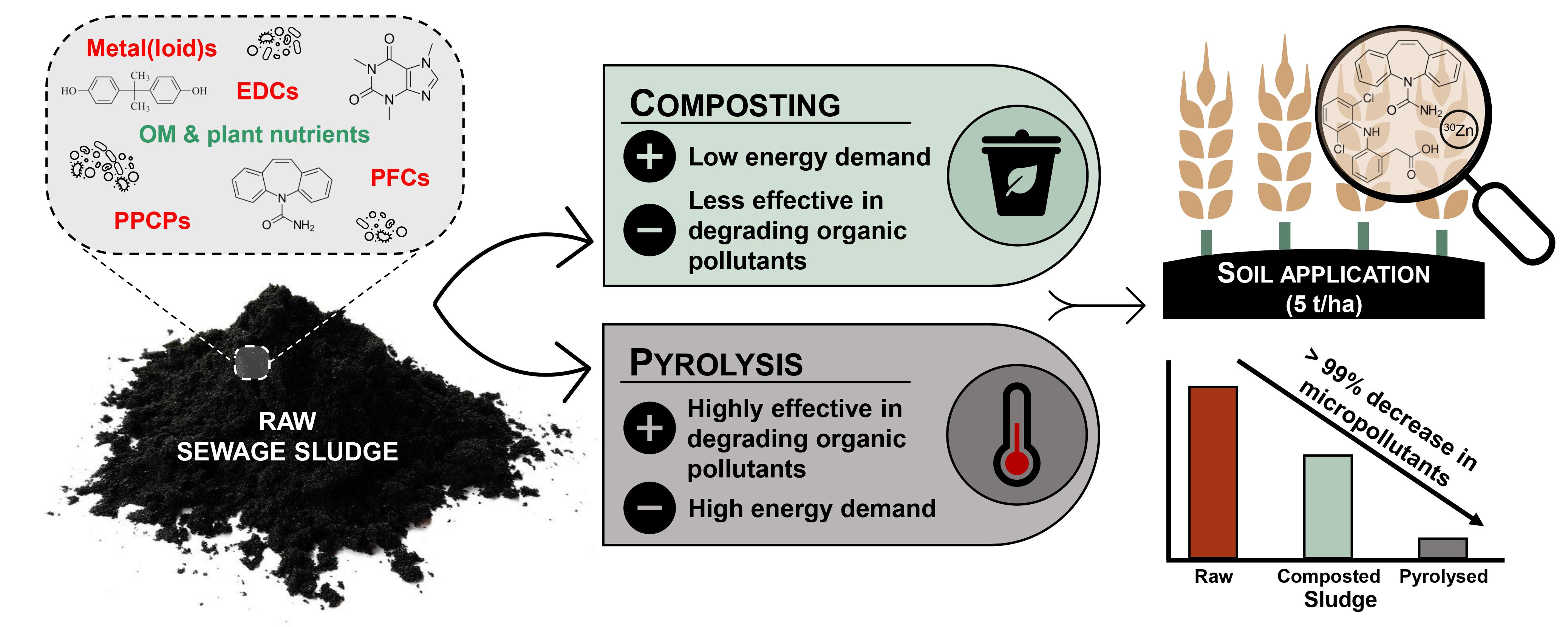 Wickramasinghe N., Vítková M., Zarzsevszkij S., Ouředníček P., Šillerová H., Ojo O. E., Beesley L., Grasserová A., Cajthaml T., Moško J., Hušek M., Pohořelý M., Čechmánková J., Vácha R., Kulhánek M., Máslová A., Komárek M., 2024. Can pyrolysis and composting of sewage sludge reduce the release of traditional and emerging pollutants in agricultural soils? Insights from field and laboratory investigations. Chemosphere 364, 143289. DOI: 10.1016/j.chemosphere.2024.143289
Read the paper here.