
In our newly published study, we used cadmium (Cd) isotopes to investigate how nanoscale zero-valent iron (nZVI) affects Cd mobility and bioavailability in contaminated soils cultivated with Agrostis capillaris, a local Cd-accumulating grass species. The application of nZVI significantly reduced Cd concentrations in pore water and plant tissues, demonstrating its effectiveness in limiting Cd uptake by plants.
Isotopic analyses revealed that newly formed Fe oxyhydroxides resulting from nZVI oxidation immobilised approximately 80% of Cd while preferentially incorporating lighter Cd isotopes. At the same time, plants mobilised additional Cd pools from the soil, further influencing isotope distributions in the soil–plant system. The study highlights the power of Cd isotopes to unravel metal transformation pathways during remediation and provides new insights for the optimisation of sustainable soil management strategies. 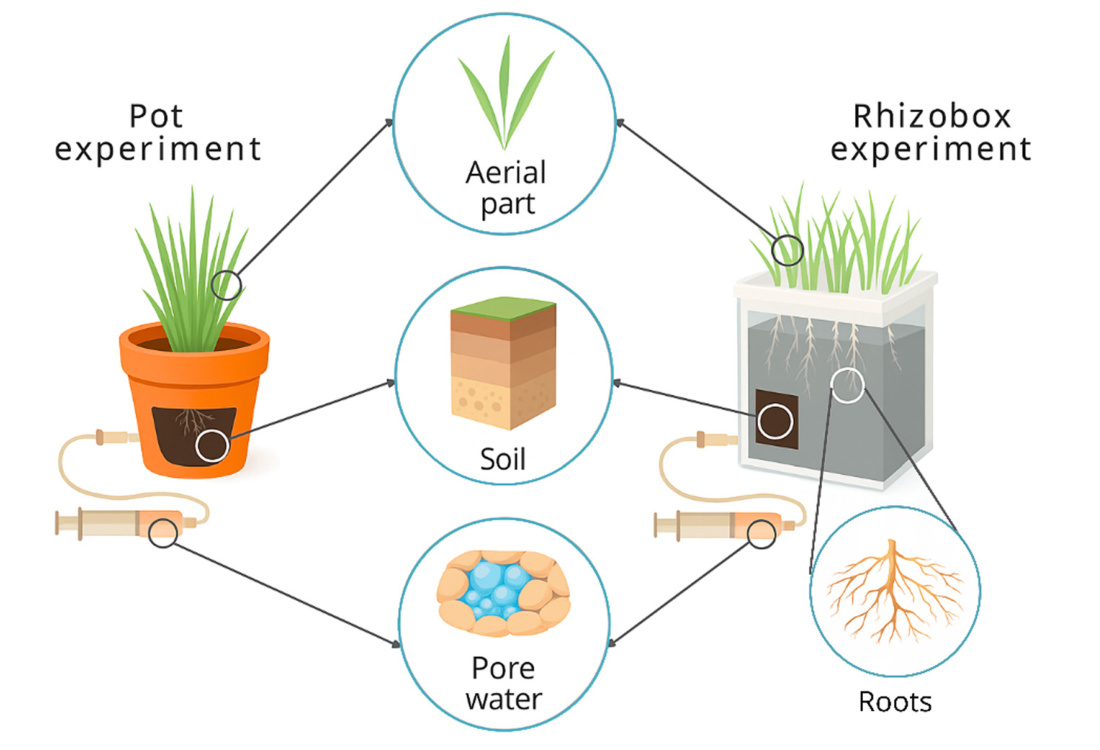
Baragano D., Astray B., Vítková M., Chrastný V., Komárek M., Ratié G., 2026. Insights of cadmium isotopes in the soil–plant system for deciphering nanoscale zero-valent iron remediation processes in contaminated soil. Environmental Science: Nano 13 (8), 3287–3299. DOI: 10.1039/D6EN00022C
Read the paper here.