
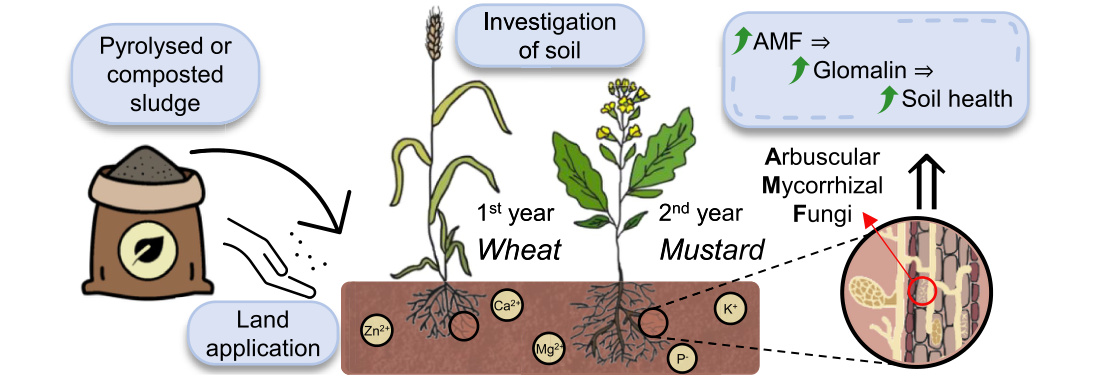
A two-year field study demonstrated that composted or pyrolysed sewage sludge can improve key indicators of soil health. The study evaluated changes in glomalin production, soil carbon fractions, pH, cation exchange capacity, and nutrient availability. Applied at 5 t/ha to two contrasting agricultural soils differing markedly in their carbon, nitrogen, and phosphorus status, both amendments increased glomalin production during winter wheat cultivation. Total carbon and active carbon (POXC) also increased significantly within the first vegetation period.
The positive effect on glomalin persisted during cultivation of non-mycorrhizal mustard in the second year, particularly in phosphorus-limited soil, highlighting the importance of nutrient status for arbuscular mycorrhizal fungi (AMF) activity. In contrast, soil pH and nutrient availability remained largely unchanged. The results show that recycling sewage sludge through composting or pyrolysis can support soil biological activity and carbon accumulation, especially in low-phosphorus agricultural systems. Further research will evaluate long-term carbon stability and plant nutrition effects.
Wickramasinghe N., Kulhánek M., Vítková M., Pohořelý M., Lewandowská Š., Trakal L., Komárek M., 2026. Temporal dynamics in soil carbon and glomalin-related soil proteins under sewage sludge-derived biochar and compost treatments. Journal of Soil Science and Plant Nutrition. DOI: 10.1007/s42729-026-03210-y
Read the paper here.