
An applied research study by Martina Vítková et al. was published in the Science of the Total Environment (IF=9.8). The study aims to comprehensively assess the suitability of locally available low-cost sludge treatment for sustainable and environmentally safe topsoil disposal in a degraded area affected by coal mining. Nine-month composting effectively decreased the risk metal(loid) leachability from the sewage sludges. Efficient re-vegetation in the sludge-amended soil was observed. Despite the low release of potential contaminants from soils, plant species (Artemisia vulgaris L.) that formed the natural vegetation cover of the experimental plots showed cumulative metal(loid) uptake. Further research on the ecotoxicity and long-term performance of the composted sludges is necessary. However, local sludge, biomass, and degraded soil supported material circularity.
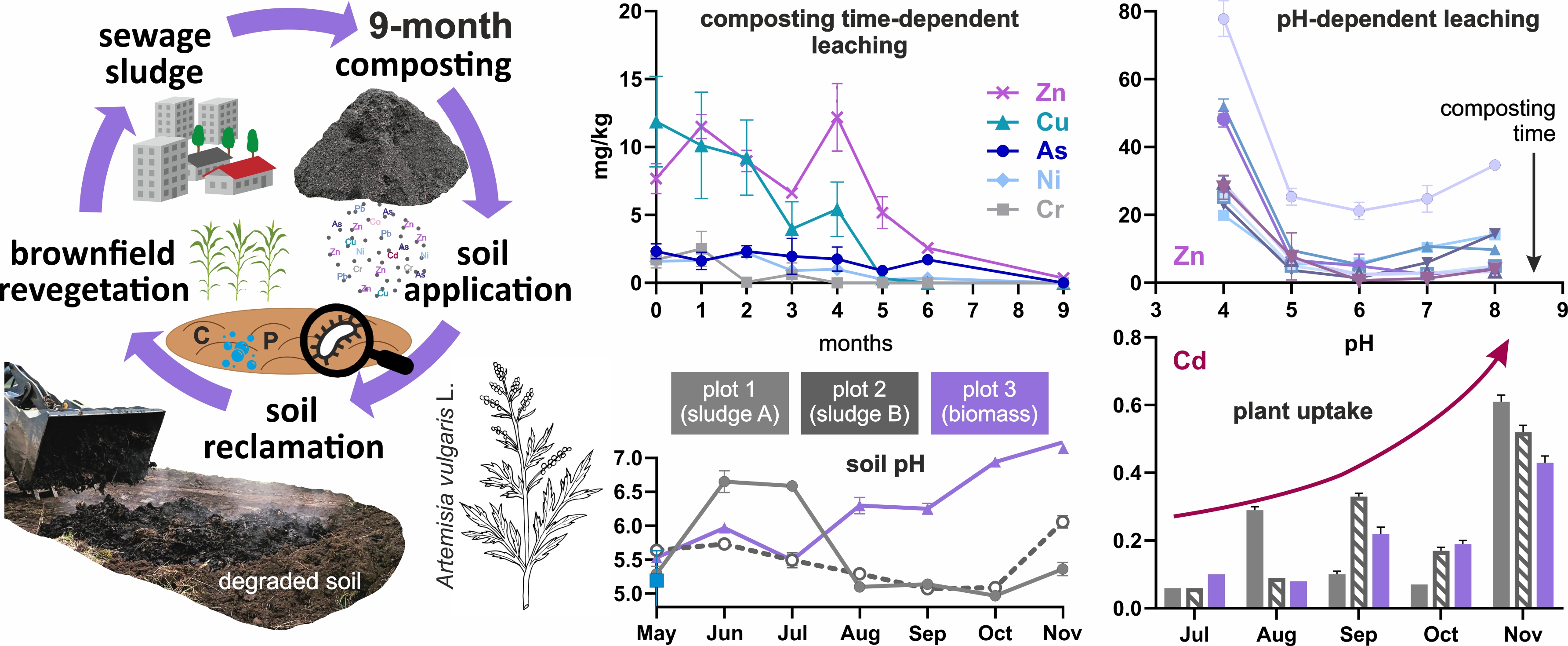
Vítková M., Zarzsevszkij S., Šillerová H., Karlova A., Šimek P., Wimmerová L., Martincová M., Urbánek B., Komárek M., 2024. Sustainable use of composted sewage sludge: Metal(loid) leaching behaviour and material suitability for application on degraded soils. Science of the Total Environment 929, 172588. DOI: 10.1016/j.scitotenv.2024.172588
Read the paper here.