
Our recent study in the Journal of Environmental Chemical Engineering (IF = 7.2) evaluated the environmental applicability of several waste-derived amendments for immobilising metal(loid)s in contaminated soils, supporting circular and sustainable economy principles. Four materials – iron chips, iron mud, sludge char, and compost – were tested in contrasting soils to assess changes in contaminant mobility. Results showed that organic amendments generally increased metal(loid) availability, while iron-based amendments achieved up to 99 % immobilisation. Combined treatments also proved efficient in reducing metal(loid) mobility. These findings provide valuable guidance for selecting suitable waste-derived materials for sustainable soil remediation.
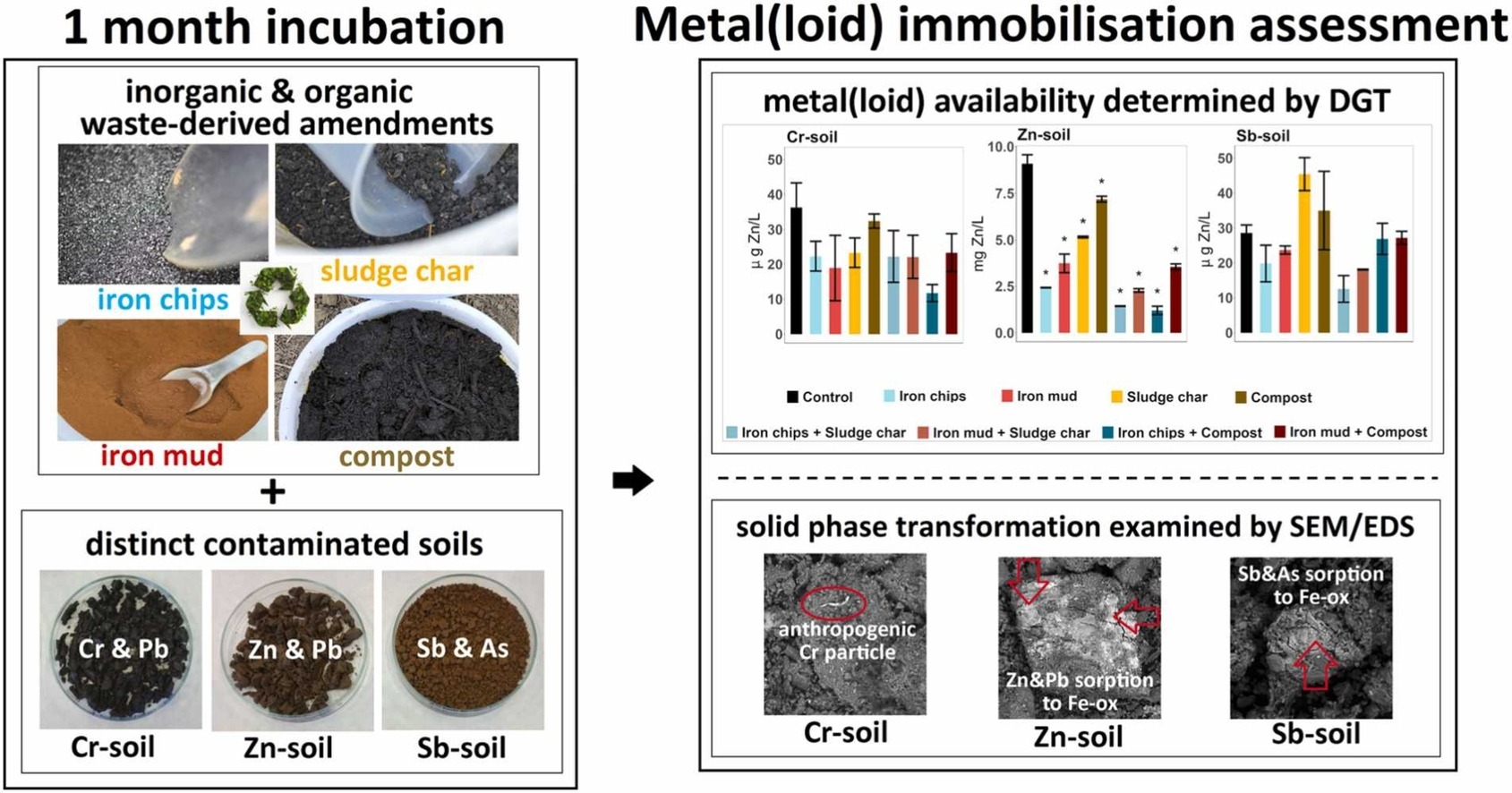
Zarzsevszkij S., Vítková M., Špirová V., Faragó T., Jurkovič Ľ., 2025. Impact of organic and inorganic waste-derived amendments on metal(loid) availability in soils contaminated by industry, mining and metallurgy. Journal of Environmental Chemical Engineering 13, 117762. DOI: 10.1016/j.jece.2025.117762
Read the paper here.